Spatial Multiplex Immunofluorescence (mIF) Services
Our mIF experts deliver GCLP-compliant workflows for assay development and digital image analysis, helping you accelerate R&D and maximize insights from limited clinical samples.
Save time and money while accelerating your research with Discovery’s mIF services
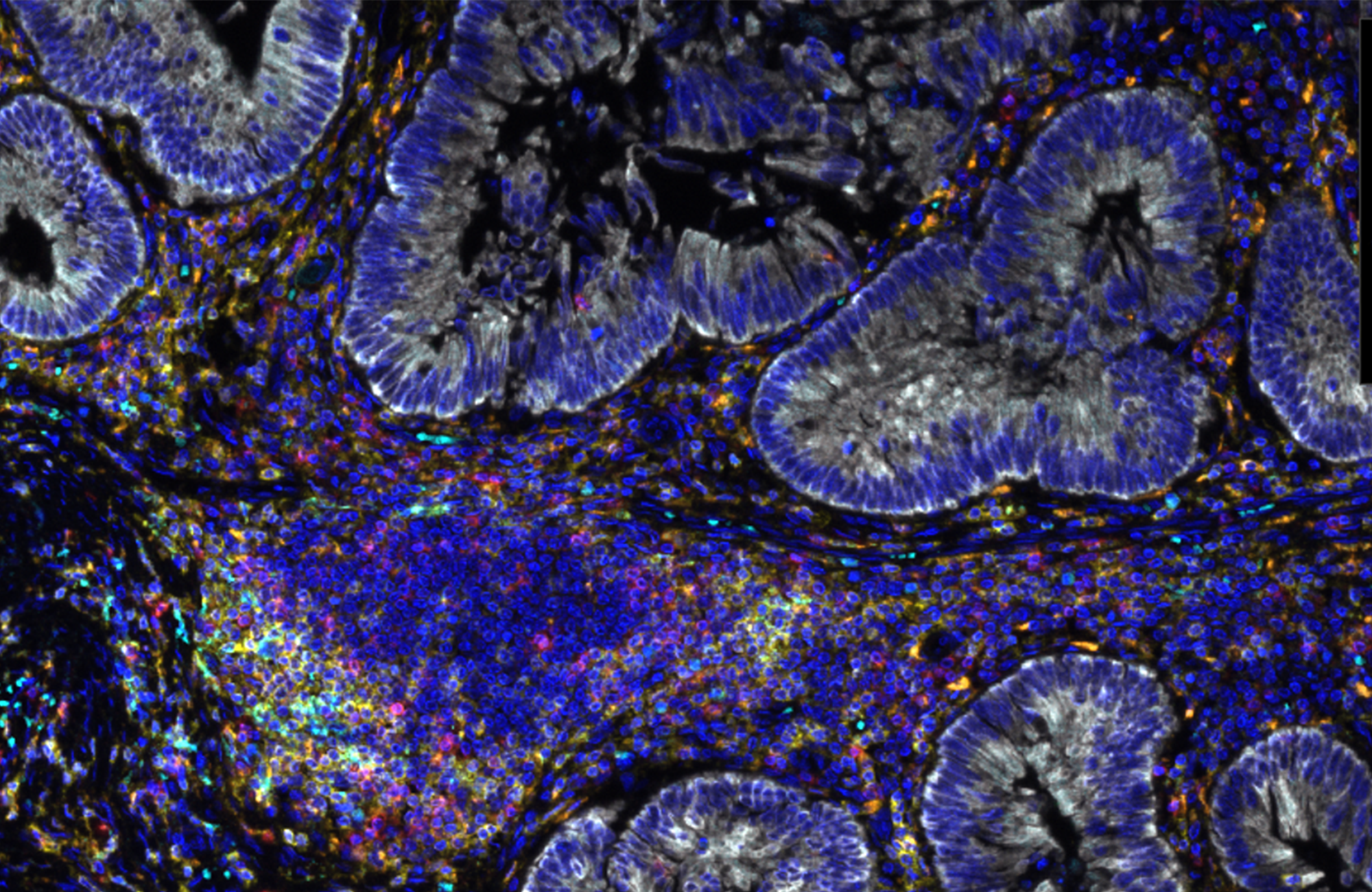
Discovery’s multiplex immunofluorescence (mIF) services combine advanced imaging technology with industry-leading biospecimen access to help you visualize and quantify complex tissue biology with precision.
Our mIF capabilities deliver:
- High-performance, GCLP-compliant custom assay development
- Reliable spatial signatures supported by optimized fluorophore pairing and stripping efficiency
- Integrated digital image analysis for fast, quantitative interpretation
Service Options
Discover our versatile Spatial Multiplex Immunofluorescence platforms tailored to your research needs. Opt for the Akoya PhenoImager HT for rapid, high-throughput analysis with up to 8 markers, or the Lunaphore COMET for comprehensive, high-resolution profiling with up to 40 markers
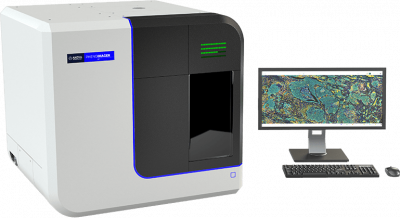
Akoya PhenoImagerTM HT
Provides unparalleled speed and performance, enabling spatial signatures at scale.
- Up to 8 markers per run
- High-throughput and fast TAT
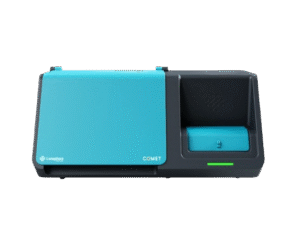
Lunaphore COMETTM
Cutting-edge platform that offers high-resolution and highly multiplexed tissue profiling—all within a single tissue section.
- Up to 40 markers per run
- Comprehensive immunophenotyping
Applications of our spatial multiplex immunofluorescence services
Our spatial profiling platforms enable deep biological insight across multiple research areas:
Immune Cell Profiling & Co-Localization
Map immune cell populations and their interactions to better understand the mechanisms driving oncology, immunology, and inflammatory disorders.
Biomarker Discovery & Validation
Detect novel biomarkers and verify their relevance for early detection, progression assessment, and precision medicine initiatives.
Tumor Microenvironment (TME) Characterization
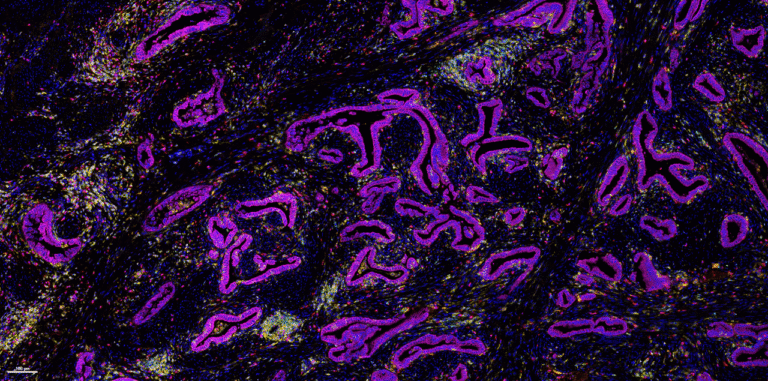
Uncover therapeutic targets by visualizing cell–cell communication, immune infiltration, and structural organization within the native TME.
Spatial Signature Development
Generate spatially resolved biomarker signatures that support the creation of new diagnostics, predictive tools, and translational research programs.
Featured Multiplex Immunofluorescence Resources
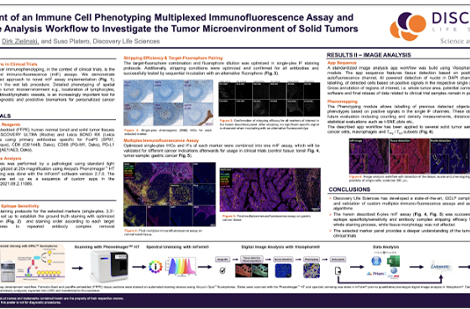
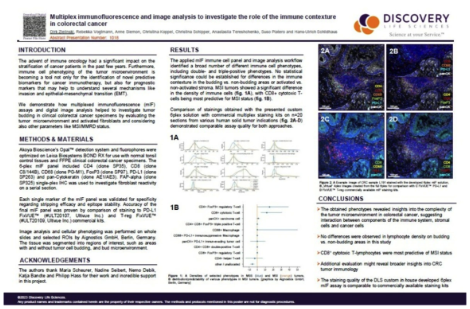
See how Discovery’s experts used mIF assays and digital image analysis to investigate tumor budding in clinical colorectal cancer specimens by evaluating the tumor microenvironment, activated fibroblasts and MSI/MMRD status.
See a demonstration of Discovery’s highly standardized approach to novel mIF assay implementation to support clinical trials.
Multiplex Immunofluorescence Frequently Asked Questions
What is multiplex immunofluorescence (mIF) and why use it over single-plex IHC?
mIF detects multiple protein targets on the same tissue section with fluorescent labels, enabling cell phenotyping, co-localization, and spatial context in a single run. Compared with single-plex IHC, mIF conserves tissue, reduces turnaround, and reveals cell–cell interactions critical for oncology and immunology studies.
Do you have off-the-shelf panels ready for use, and can you customize new panels?
Yes, we offer a variety of pre-characterized panels enabling phenotyping of distinct immune cell populations and a comprehensive characterization of the immune landscape. Besides, our core expertise is building custom mIF panels according to customers’ needs across various disease indications with different degrees of validation levels.
Are Discovery’s mIF assays GCLP-compliant and validated?
Yes. Discovery’s mIF experts run GCLP-compliant workflows for assay establishment and validation, including controls, specificity/sensitivity checks, and standardized digital image analysis—supporting regulated and late-stage studies.
What is your assay development and validation process for custom mIF?
We follow a staged path: antibody vetting → fluor pairing/stripping tests → single-plex DAB/IF truthing → multiplex optimization → control strategy (positive/negative/isotype) → precision/reproducibility runs → locked protocol with acceptance criteria and image-analysis algorithm validation.
Do you provide quantitative digital image analysis and what metrics are reported?
Yes. We deliver cell segmentation and phenotyping, marker intensity, co-expression, and spatial proximity/nearest-neighbor metrics with exportable data tables and annotated images. Algorithms are validated alongside the assay and tuned to the study’s endpoints.
How does mIF help with biomarker strategy for clinical trials?
mIF supports biomarker triage and endpoint definition by mapping immune infiltration (hot/cold tumors), checkpoint expression, and cell–cell interactions in situ. Discovery’s standardized methods enable site-to-site concordance and generate fit-for-purpose, quantitative endpoints for oncology and immunology trials.
What are the typical turnaround times and how much tissue is required?
Feasibility to locked assay typically runs a few weeks, depending on antibody sourcing and panel complexity; production studies follow agreed schedules. mIF conserves tissue by measuring multiple targets on a single section—ideal for precious clinical material and TMAs.