Expression patterns across tissues at all developmental stages
Our IHC services are led by the scientists behind the development of low‑HER2 and PD‑L1 CDx assays, delivering precise and actionable insights for biomarker development, therapeutic target validation, and prevalence studies from preclinical research through CDx development.
Decades of experience developing, validating and applying IHC assays throughout every stage of development for leading biotech and pharma clients.
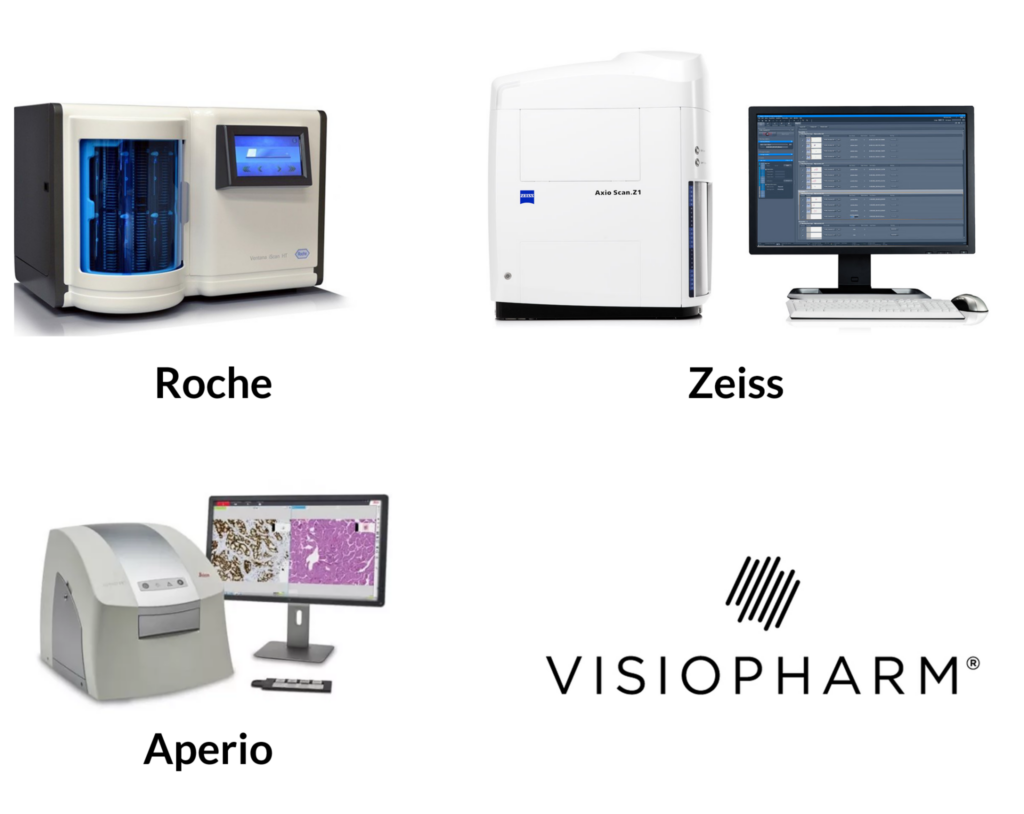
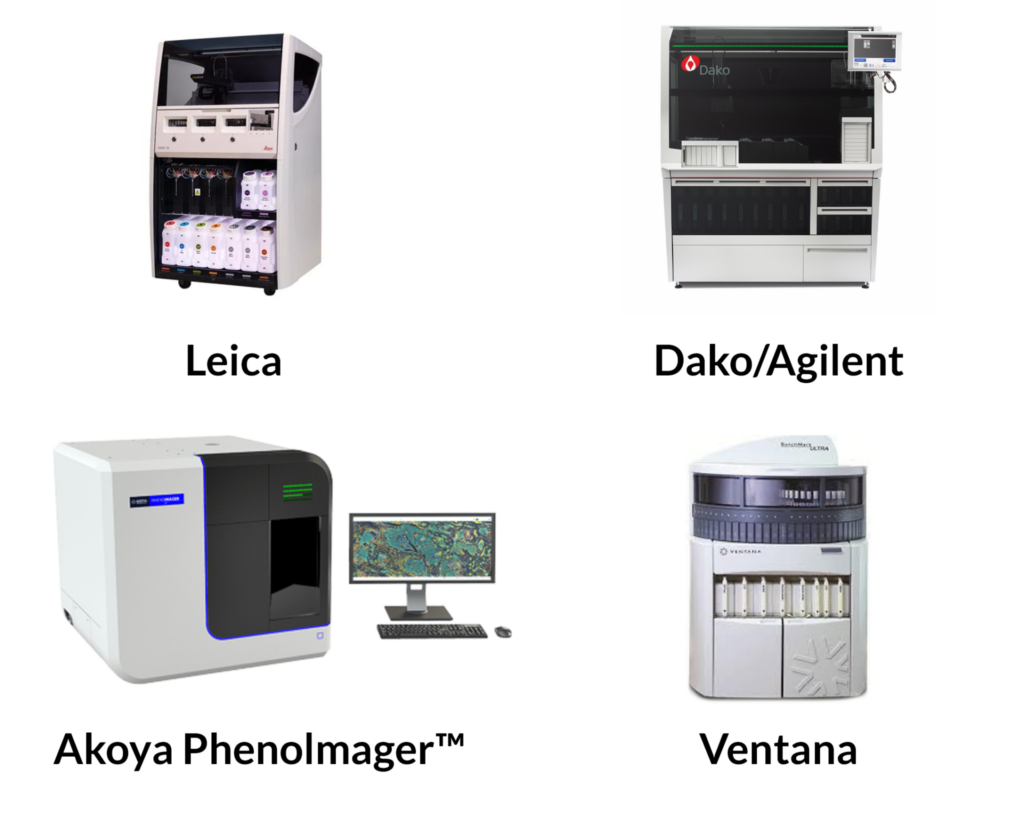
A technology agnostic approach to enable an unbiased selection of the most suitable platforms.
Global standardization and harmonization of IHC assays including global clinical trial testing and our Biomarker Academy™ training programs with post-approval services.
Access to the world’s largest commercial biorepository to build optimal study cohorts.
We use a technology-agnostic approach so you can choose the right technology for your project. Our expert scientists work with you consultatively to make sure your study is designed to achieve optimal outcomes.
Our experts have designed an industry-leading assay validation approach that starts with careful IHC assay development and optimization. We do more than simply demonstrate that an assay can detect a target in various conditions, we:
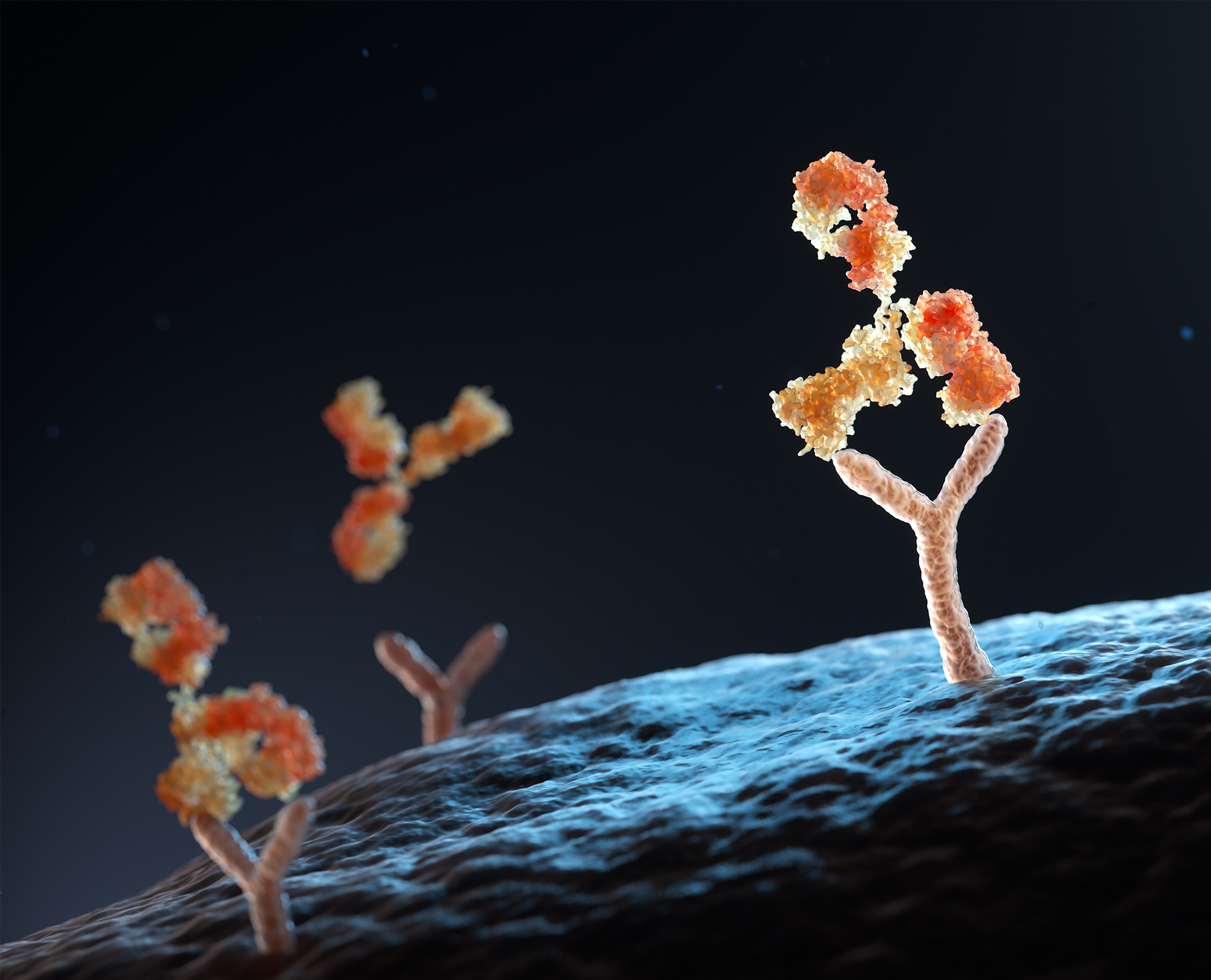
Immunohistochemistry (IHC) is a laboratory technique used to detect and visualize specific proteins within tissue sections using antibodies. By preserving tissue architecture, IHC enables researchers to assess biomarker expression, localization, and prevalence in the biological context of disease.
IHC services are used in biomarker development to evaluate protein expression patterns, validate therapeutic targets, and assess biomarker prevalence across tissues and indications. These insights support translational research, patient stratification, and progression toward clinical and companion diagnostic programs.
IHC can be performed on a variety of sample types, most commonly formalin-fixed, paraffin-embedded (FFPE) tissues. Depending on study design, frozen tissues, xenografts, animal models, and human clinical samples may also be analyzed using validated IHC workflows.
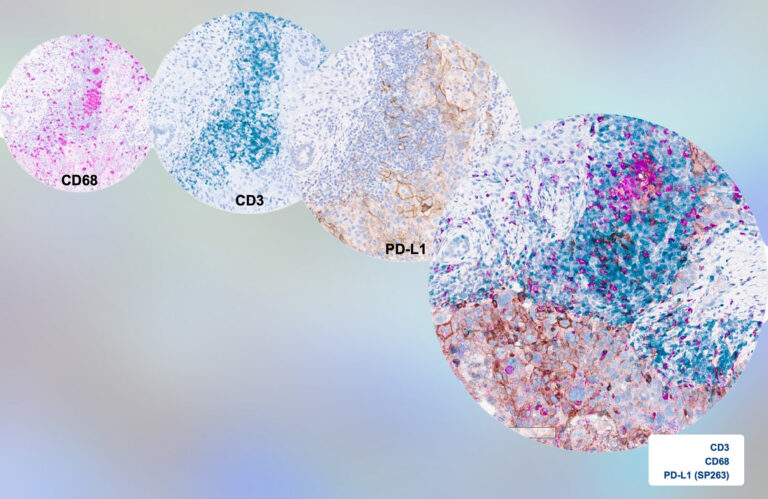
IHC typically evaluates one biomarker per tissue section using chromogenic detection, while multiplex immunofluorescence enables simultaneous analysis of multiple biomarkers within the same tissue. The choice depends on study complexity, tissue availability, and the need for spatial or multi-target insights.
IHC assays are developed through optimization of antibodies, pretreatment conditions, and detection methods, followed by validation of specificity, sensitivity, precision, and reproducibility. Fit-for-purpose validation ensures assays are reliable for their intended research or clinical application.
Digital pathology enhances IHC analysis by enabling objective, quantitative assessment of biomarker expression across whole-slide images. Image analysis tools improve consistency, reduce observer bias, and support scalable analysis across large tissue cohorts.
IHC supports companion diagnostic development by establishing validated assays, scoring criteria, and cutoff thresholds linked to clinical outcomes. These workflows help identify patient populations most likely to benefit from targeted therapies and support regulatory-ready diagnostic strategies.
IHC services may be performed under quality frameworks such as GCLP, CAP, and CLIA, depending on study requirements. These standards ensure assay reproducibility, data integrity, and suitability for translational and clinical research applications.
Helping you understand your target biomarkers at every stage of research and clinical development using any leading technology platform.
Clarity Before You Start
We align on study goals, timelines, and biological context, including mechanism of action, target biomarkers, and intended use. Our team helps define the right tissues, indications, and controls, and identifies optimal antibodies to support confident downstream analysis.
Validated for Performance and Reproducibility
We optimize pretreatment conditions, confirm assay specificity, and evaluate sensitivity, range, and linearity. Scoring approaches are developed and validated to ensure robust, reproducible results aligned with applicable GCLP expectations.
Consistent Results at Research or Clinical Scale
We perform IHC testing on research or clinical samples using validated methods and scoring criteria. Expression patterns, tumor surveys, and cutoff thresholds are generated to support biomarker prevalence assessment and patient stratification.
Integrated labs maintain chain-of-custody and accelerate EU trial startup.
Insights You Can Act On
Full-service pathology review and customized reporting translate staining data into meaningful biological insight. Outputs are delivered in study- and submission-ready formats, with support for IND-enabling programs and Prototype CDx planning.