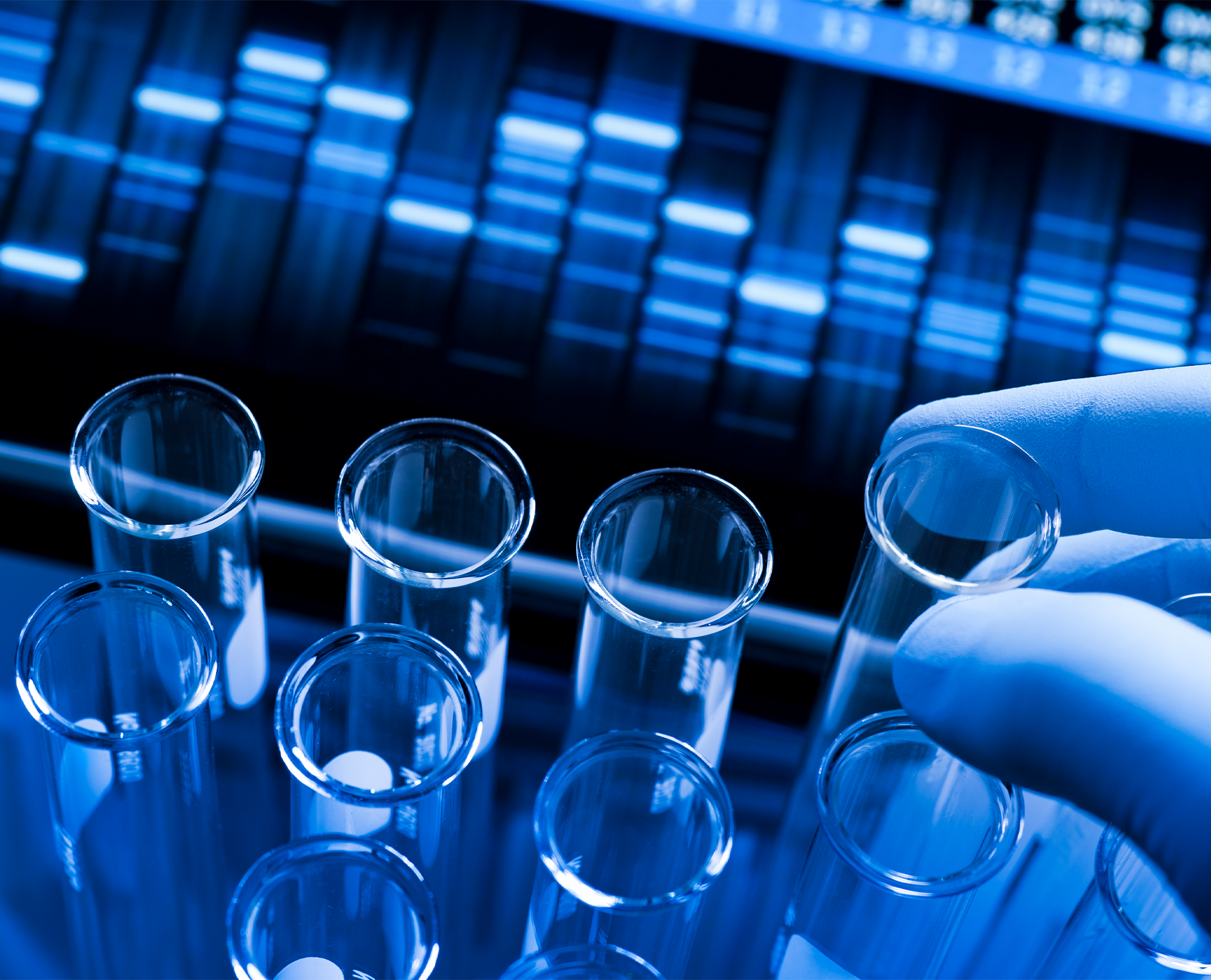
Biobanks around the world hold millions of human biospecimens collected over decades of clinical and translational research, including cryopreserved cells, biofluids, and formalin-fixed paraffin-embedded (FFPE) tissues. These legacy specimens can be uniquely valuable, often holding insights that newly collected samples simply cannot provide. When paired with longitudinal clinical data, they allow researchers to study disease progression, evaluate treatment responses, investigate long-term outcomes, and identify biomarkers or therapeutic targets. Despite their scientific value, legacy biospecimens are often underutilized. Limited visibility into available inventories, challenges locating well-annotated samples with reliable metadata, and concerns about long-term sample stability can all contribute to reduced use of older biospecimens.
Preserving Scientific Value Over Time
A growing body of research demonstrates that biospecimens stored under properly controlled cryogenic conditions remain highly stable and analytically useful for many years. Cryopreservation halts biological activity at ultra-low temperatures, typically in vapor-phase liquid nitrogen (LN₂), minimizing enzymatic degradation and structural damage while preserving molecular and cellular characteristics essential for downstream analyses1.
Studies evaluating long-term cryopreserved human cells have shown that overall cell viability, DNA and RNA integrity, and key functional characteristics are largely maintained. For instance, analyses of peripheral blood mononuclear cells (PBMCs) stored for extended periods indicate that T cell proliferation, activation, and immune function remain intact2. Similarly, cryopreserved leukopaks stored for 30 months demonstrated comparable post-thaw cell viability and mononuclear cell recovery to material stored for just six weeks3. Additionally, metabolomics analysis of EDTA plasma stored for up to 16 years showed that only ~2% of 231 measured metabolites changed significantly within the first seven years, demonstrating preservation of molecular characteristics over time4.
These findings confirm that, when properly stored, legacy biospecimens are reliable for a wide range of molecular and translational studies.
Discovery Legacy Program
In 2025, Discovery Life Sciences launched the Discovery Legacy Program to provide researchers with access to a curated inventory of older, well-characterized biospecimens at discounted pricing. The collection includes dissociated tumor cells (DTCs), PBMCs, plasma, frozen tissue, bone marrow mononuclear cells (BMMCs), leukopaks, and bone marrow samples. With more than 200,000 samples available, and 30–40% linked to patient follow-up data, the program offers a powerful resource for longitudinal and translational research.
Researchers leveraging the Discovery Legacy Program report improved access to high-quality samples and faster project execution, even under tight timelines.
“My team and I had tight deadlines to meet for a couple of projects that entailed the use of clinical samples. Through the Discovery Legacy Program, we were able to quickly obtain clinical samples at a discounted price. The Discovery team helped us pinpoint the exact samples we needed. The Discovery Legacy Program made it very convenient to obtain more clinical samples weeks later, with the same speed and discounted prices, which enabled us to generate high quality data and complete our projects on time.”
Dr. Andreja Jovic, Associate Director, Deepcell Bio
By increasing the visibility and accessibility of these specimens, the program helps maximize the scientific impact of previously collected patient samples. As new biospecimens age into eligibility, the inventory is continuously refreshed, creating a dynamic resource that expands over time to support innovation in genomics, biomarker discovery, immunology, and beyond.
No Skips, No Static Demonstrating Long-Term Biospecimen Stability
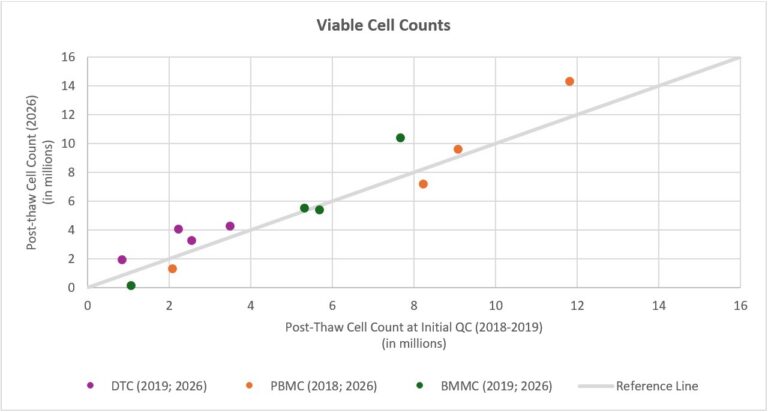
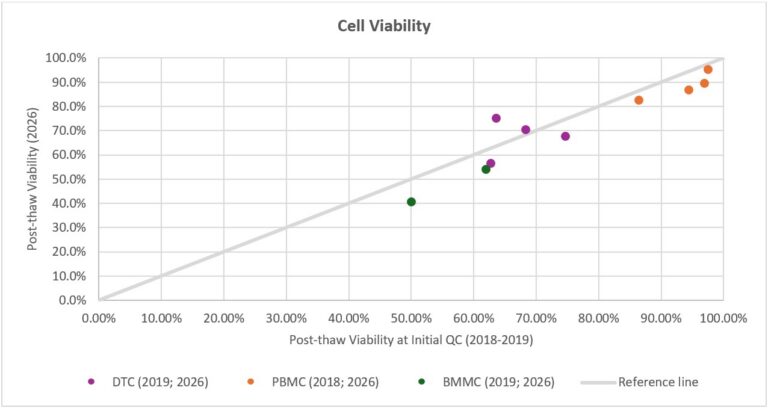
To confirm the long-term stability of samples, DTCs, PBMCs, and BMMCs cryopreserved between 2018 and 2019 were thawed after extended storage. Viable cell counts (Figure 1) and cell viability (Figure 2) were compared between initial quality control (QC) measurements and post-thaw results obtained in 2026. Each data point represents a matched sample, with the x-axis indicating the initial QC measurement and the y-axis representing the post-thaw value. The diagonal reference line indicates where values would fall if measurements were identical at both time points. Across both datasets, the samples cluster closely along this line, demonstrating strong concordance between initial QC and post-thaw measurements.