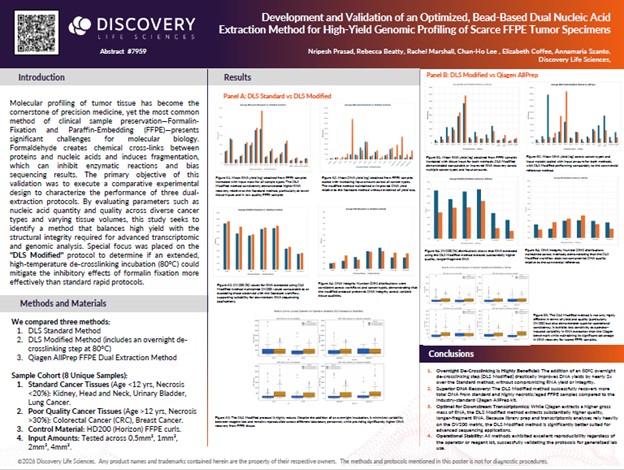
Molecular profiling of tumor tissue has become the cornerstone of precision medicine, yet the most common method of clinical sample preservation—Formalin-Fixation and Paraffin-Embedding (FFPE)—presents significant challenges for molecular biology. Formaldehyde creates chemical cross-links between proteins and nucleic acids and induces fragmentation, which can inhibit enzymatic reactions and bias sequencing results. The primary objective of this validation was to execute a comparative experimental design to characterize the performance of three dual-extraction protocols. By evaluating parameters such as nucleic acid quantity and quality across diverse cancer types and varying tissue volumes, this study seeks to identify a method that balances high yield with the structural integrity required for advanced transcriptomic and genomic analysis. Special focus was placed on the “DLS Modified” protocol to determine if an extended, high-temperature de-crosslinking incubation (80°C) could mitigate the inhibitory effects of formalin fixation more effectively than standard rapid protocols.