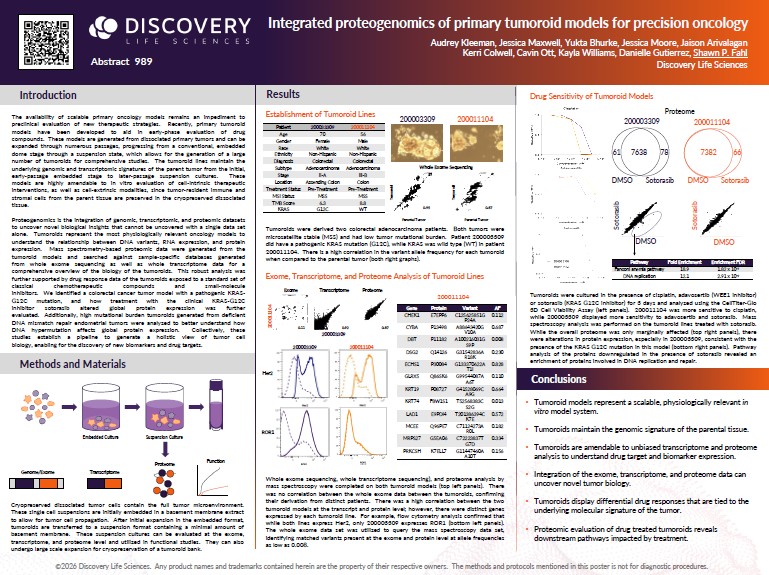
The availability of scalable primary oncology models remains an impediment to preclinical evaluation of new therapeutic strategies. Recently, primary tumoroid models have been developed to aid in early-phase evaluation of drug compounds. These models are generated from dissociated primary tumors and can be expanded through numerous passages, progressing from a conventional, embedded dome stage through a suspension state, which allows for the generation of a large number of tumoroids for comprehensive studies. The tumoroid lines maintain the underlying genomic and transcriptomic signatures of the parent tumor from the initial, early-passage embedded stage to later-passage suspension cultures. These models are highly amendable to in vitro evaluation of cell-intrinsic therapeutic interventions, as well as cell-extrinsic modalities, since tumor-resident immune and stromal cells from the parent tissue are preserved in the cryopreserved dissociated tissue.