The incidence of autoimmune diseases is rising globally, with studies estimating a 12.5% annual increase in prevalence, creating a growing global health burden1. More than 100 conditions have been identified, including systemic lupus erythematosus (SLE), rheumatoid arthritis (RA), Crohn’s disease, multiple sclerosis (MS), and Sjögren’s syndrome, each defined by its own triggers, biomarkers, and clinical patterns2. As researchers work to decipher complex mechanisms and develop new therapies, access to high-quality, disease-relevant cellular materials is increasingly important.
Unlike oncology, where precision medicine efforts are often supported by biospecimens routinely generated during standard-of-care surgical procedures, autoimmune research lacks a comparable passive sample pipeline. Archival remnants alone are insufficient to meet growing research demand. Intentional biobanking efforts are therefore critical to supplying diseased patient materials for biomarker discovery, immune profiling, and the development of targeted therapeutic strategies.
Collecting biospecimens from autoimmune patients presents unique challenges that can affect sample quality, yield, and usability. For instance, chronic inflammation and immune dysregulation may reduce cell viability, while circulating cytokines, autoantibodies, and other plasma or serum markers can fluctuate with disease activity or treatment. Additionally, comorbidities and overall health status can limit the volume and frequency of safe blood draws, making sample collection more complex than with healthy donors. Careful clinical annotation is therefore essential to ensure samples are properly contextualized for research applications.
Dedicated Efforts to Advance Autoimmune Research Through Expanded Biobanking
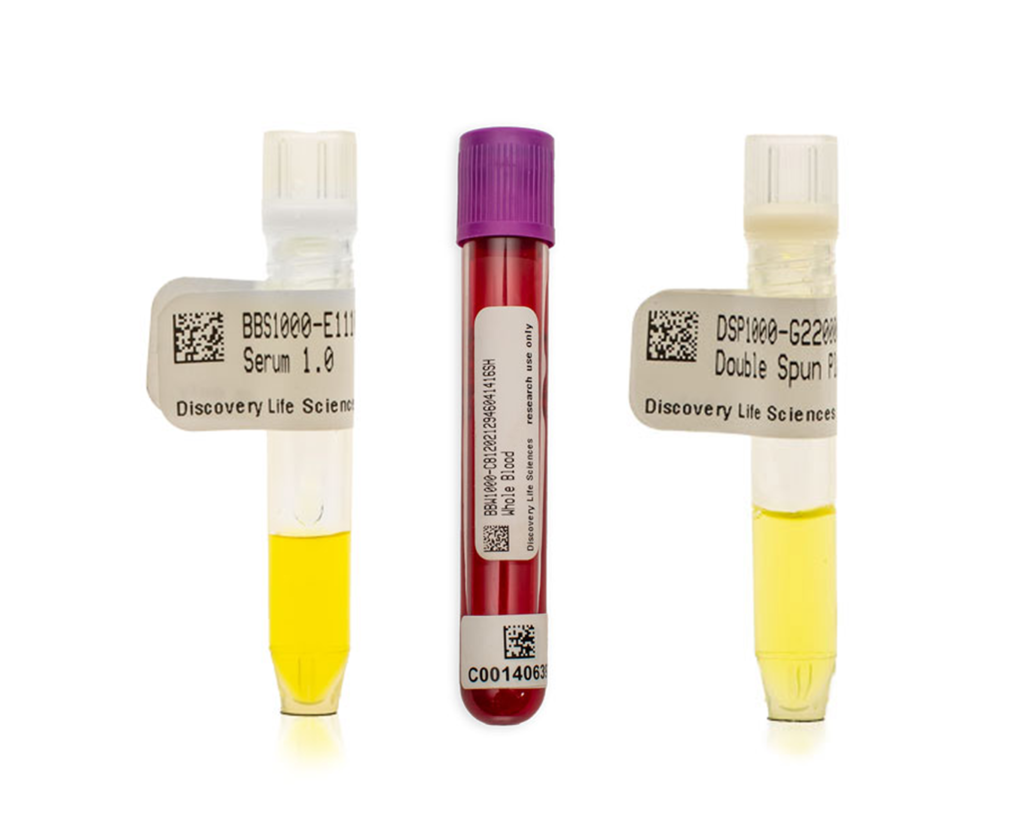
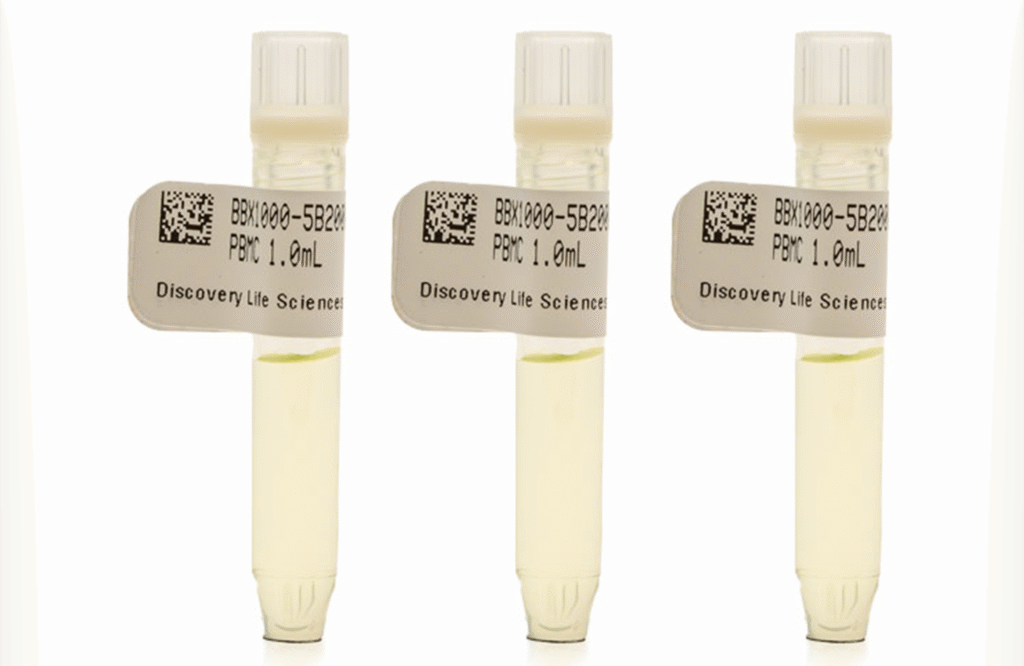
Discovery Life Sciences (Discovery) has been supporting many organizations in developing innovative autoimmune therapeutics, and a consistent theme has emerged: researchers need reliable access to well‑characterized, disease‑state samples that reflect the complexity of real‑world patient biology. Recognizing this need, Discovery has continued to invest in its autoimmune biobanking capabilities, strengthening both the depth of available indications and the quality of associated clinical data. With deep expertise in sourcing disease-state samples, including navigating the clinical and regulatory complexities of procurement, Discovery has built a large inventory of autoimmune samples, including diseased blood, biofluids, and cellular materials such as peripheral blood mononuclear cells (PBMCs) collected from patients with conditions, including SLE, RA, Crohn’s disease, ulcerative colitis, psoriatic arthritis, scleroderma, and ankylosing spondylitis.
Discovery’s diseased PBMC collections provide researchers with a robust tool to study immune dysfunction in autoimmune patients. Using the TBNK (T/B/NK Cells) flow cytometry panel, researchers can define and characterize immune cell composition with greater precision, examine disease-specific phenotypes, and explore the cellular mechanisms driving dysregulation across patient populations.
For example, in drug development, differences in immune cell distributions can influence pathway dominance and biomarker expression, directly impacting target validation and patient stratification. TBNK profiling helps contextualize responses to emerging immunomodulatory therapies, including agents targeting IL-23, TYK2, or FcRn pathways, by linking therapeutic mechanisms to the underlying immune landscape of autoimmune disease. In cell therapy research, defining baseline immune composition is important in early evaluation of immune-modulating therapies, including emerging cell and gene therapy approaches such as CRISPR-edited immune cells, allogeneic NK- or T-cell therapies, and Treg-based platforms. Establishing the relative abundance of key immune populations upfront helps researchers identify the appropriate samples for their work to interpret activation, cytotoxicity, and cytokine readouts in functional assays, providing critical biological context during proof-of-concept studies.
Beyond PBMCs, Discovery provides disease-state plasma samples for biomarker profiling at both the proteomic and circulating signature levels. General biomarkers include antinuclear antibodies (ANA), erythrocyte sedimentation rate (ESR), and C-reactive protein (CRP), while autoimmune-specific biomarkers include rheumatoid factor (RF) and anti-cyclic citrullinated peptide (anti-CCP) for rheumatoid arthritis. Together, these autoimmune biospecimens help researchers connect cellular behaviors with circulating biomarkers, building a more integrated understanding of autoimmune pathology.
Bridging the Autoimmune Biospecimens Gap
Autoimmune biospecimens remain some of the most challenging human samples to find and characterize, limiting progress in understanding complex immune dysfunction and developing effective targeted therapies. By expanding our autoimmune biobanking capabilities, Discovery is helping bridge this gap, empowering researchers to better understand disease mechanisms, validate biomarkers, and develop targeted therapies for autoimmune patients. Learn more at www.dls.com
References
- Miller F. W. (2023). The increasing prevalence of autoimmunity and autoimmune diseases: an urgent call to action for improved understanding, diagnosis, treatment, and prevention. Current opinion in immunology, 80, 102266. https://doi.org/10.1016/j.coi.2022.102266
- De Widt L. (2025, January 6). New study calculates autoimmune disease prevalence in U.S. Mayo Clinic. https://newsnetwork.mayoclinic.org/discussion/new-study-calculates-autoimmune-disease-prevalence-in-u-s/