Human primary cell drug efficacy models evaluate drug effects on blood cell function, enabling faster, more informed decisions across discovery and translational research programs.
Evaluate drug–induced functional changes across key immune and hematopoietic cell types using validated in vitro primary cell models and mechanistic assays:
Hematology Models
Immunology & Inflammation Models
Immuno‑Oncology & Mechanistic Models
For more information about these assays, refer to the Frequently Asked Questions below.
Our primary cell efficacy models measure functional changes such as maturation, activation, cytokine induction, cytotoxicity, and intracellular signaling. These readouts directly reflect how your drug influences the target cell type, providing mechanistic clarity early in development.
We support small molecules, biologics, ADCs, bispecifics, T cell engagers, cytokines, immunomodulators, and most other modalities. Many assays can be adapted for Fc-dependent mechanisms, receptor-mediated signaling, or intracellular pathway modulation.
Most assays require minimal compound quantities and simple formulation details. Turnaround ranges from 24 hours for cytokine induction to 7–14 days for maturation or immuno‑oncology models, depending on complexity and cell type.
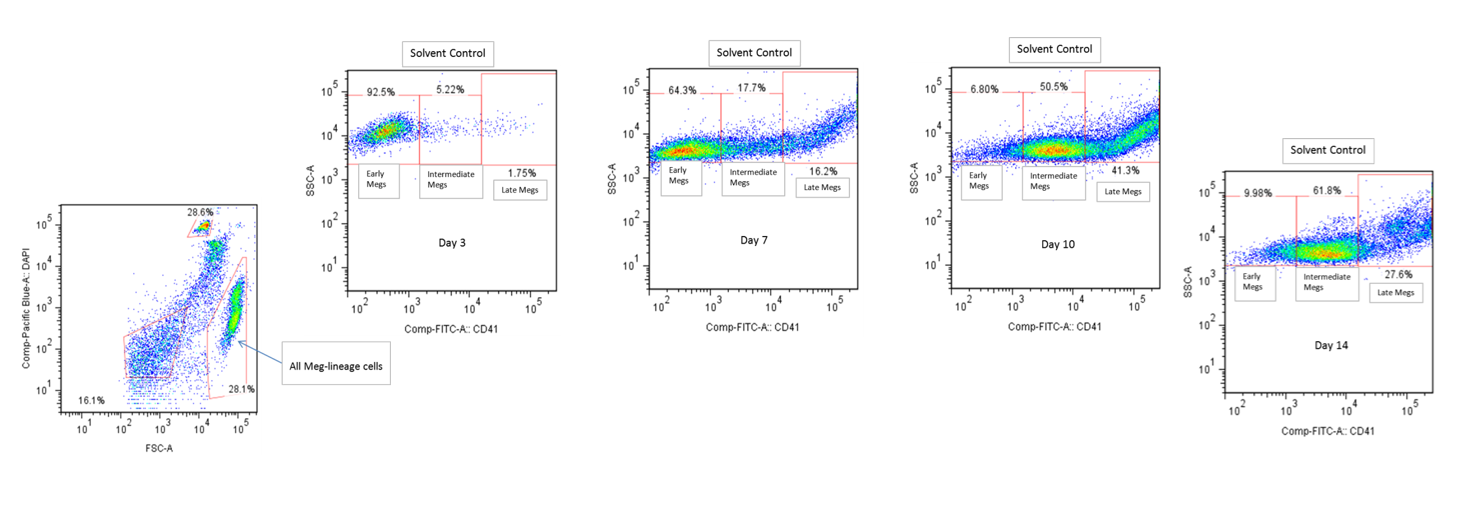
Myeloid, erythroid, and megakaryocyte maturation assays provide a powerful platform for evaluating how a drug candidate influences hematopoietic development across specific lineages. These assays enable direct measurement of a compound’s ability to enhance, restore, or modulate the maturation of neutrophils, red blood cells, megakaryocytes, and megakaryocyte‑derived platelets. These are key readouts for therapies designed to correct hematopoietic dysfunction.
Using primary CD34+ hematopoietic stem and progenitor cells, Discovery cultures cells with lineage‑specific growth factors to drive controlled differentiation. Drug candidates can then be introduced at defined stages to assess their impact on proliferation, lineage commitment, and terminal maturation. For greater mechanistic insight, our liquid‑culture platforms allow drug addition or washout at multiple timepoints, enabling modeling of clinically relevant dosing strategies.
Maturation dynamics and drug‑induced changes are quantified using flow cytometry, providing high‑resolution data on how a therapy influences hematopoietic recovery or lineage‑specific output.
They help predict the therapeutic’s risk of causing cytokine release syndrome (CRS), also called cytokine storm, before clinical trials. Our experts can assess the efficacy of drugs intended to restrict cytokine secretion as well as T cell activation and cytokine release potential of your drug candidates. These assays are often required for IND submissions with soluble, wet bound, and air-dried presentations to fulfill FDA requirements
Discovery can also perform T cell activation and cytokine release assays for antibody-based drugs, small molecules, and CAR-T cells within oncology and across other therapeutic areas, facilitating drug candidate comparison with commercially available drugs with known stimulatory or inhibitory properties.
Discovery’s ADCC assay services help assess antibody's ability to facilitate effector cell-mediated cell killing by NK cells, allow researchers to rank antibody candidates’ tumor/cancer cell killing effectiveness and evaluate bi-specific antibodies and other immune cell modulators.
Discovery uses primary cells (PBMCs, specific enriched cell populations, or pre-screened natural killer V158+ cells) for generating biologically relevant data and provides flow cytometry-based readouts.
Cell cycle analysis screens antibody-based therapeutics for complement events, facilitating safety profiling. Discover uses fresh blood (<4 hours old) and provides flow cytometry readouts to ensure better responses.
Discovery’s MCA assay service helps preclinical researchers test compounds that could potentially reverse mast cell activation, as measured by CD63 expression. This assay predicts drug‑candidate efficacy by generating mature mast cells from primary CD34⁺ cells cultured with defined growth factors, providing a biologically relevant system for evaluating compound‑driven activation or deactivation.
The platform is fully adaptable to your program needs, whether you want to test compounds directly or supply fresh, primary mature mast cells for your allergy research.
Discovery also offers Fresh Primary Mast Cells if you prefer to run these mast cell assays in your own laboratory, giving you full flexibility to integrate mature, biologically relevant cells directly into your allergy research workflows.
Hematopoietic progenitor cells in bone marrow give rise to mature blood cells of the myeloid, erythroid and megakaryocytic lineages. White Paper
Advance drug candidates with greater confidence using human primary blood cell models and functional assays that provide predictive insights into both therapeutic activity and hematologic safety. Explore our other assay services.
Clinically predictive human primary cell assays reveal both on-target and off-target blood toxicity risks early to enable faster, more informed preclinical drug development decisions.
EXPLORE MOREHuman primary cell disease models evaluate drug efficacy on hematologic disease biology, enabling faster, more informed decisions across discovery, translational research, and early clinical development.
EXPLORE MORE