Genomics Services
Harnessing cutting-edge technologies, automated workflows, and industry-leading expertise for unmatched genomics outcomes.
Genomics Services
Discovery Life Sciences delivers scalable, end-to-end genomics services to empower biotech and biopharma partners in translational research and clinical applications.
From biomarker discovery and therapeutic target identification in oncology, immunology, and neurology to supporting regulatory submissions with validated, CAP-accredited, CLIA-certified, GLP-compliant assays, our high-throughput platforms and proprietary protocols ensure reliable, bias-reduced data at any scale.
RNA Sequencing
Exome and Targeted Sequencing
Whole Genome Sequencing
Single Cell Sequencing
Epigenomic Sequencing
Bioinformatics Services – Data Interpretation and Storage
World-Class Services from a Premier Genome Center
Utilize the latest genomic technologies at unmatched speed and scale. Discovery’s Genomics Services has processed hundreds of thousands of research and clinical samples using whole genome, exome, transcriptome, and other, more targeted NGS approaches.
Our multi-modal expertise ensures the highest-quality data for every project from any sample type, e.g. serum to FFPE, frozen specimens and even CSF.
Optimized multi-omic integration with clinical flow cytometry, cell biology, molecular pathology, and proteomic services – all under one roof
Access to the world’s largest commercial biorepository to build optimal study cohorts
Industry-leading dual RNA and DNA extraction services are available
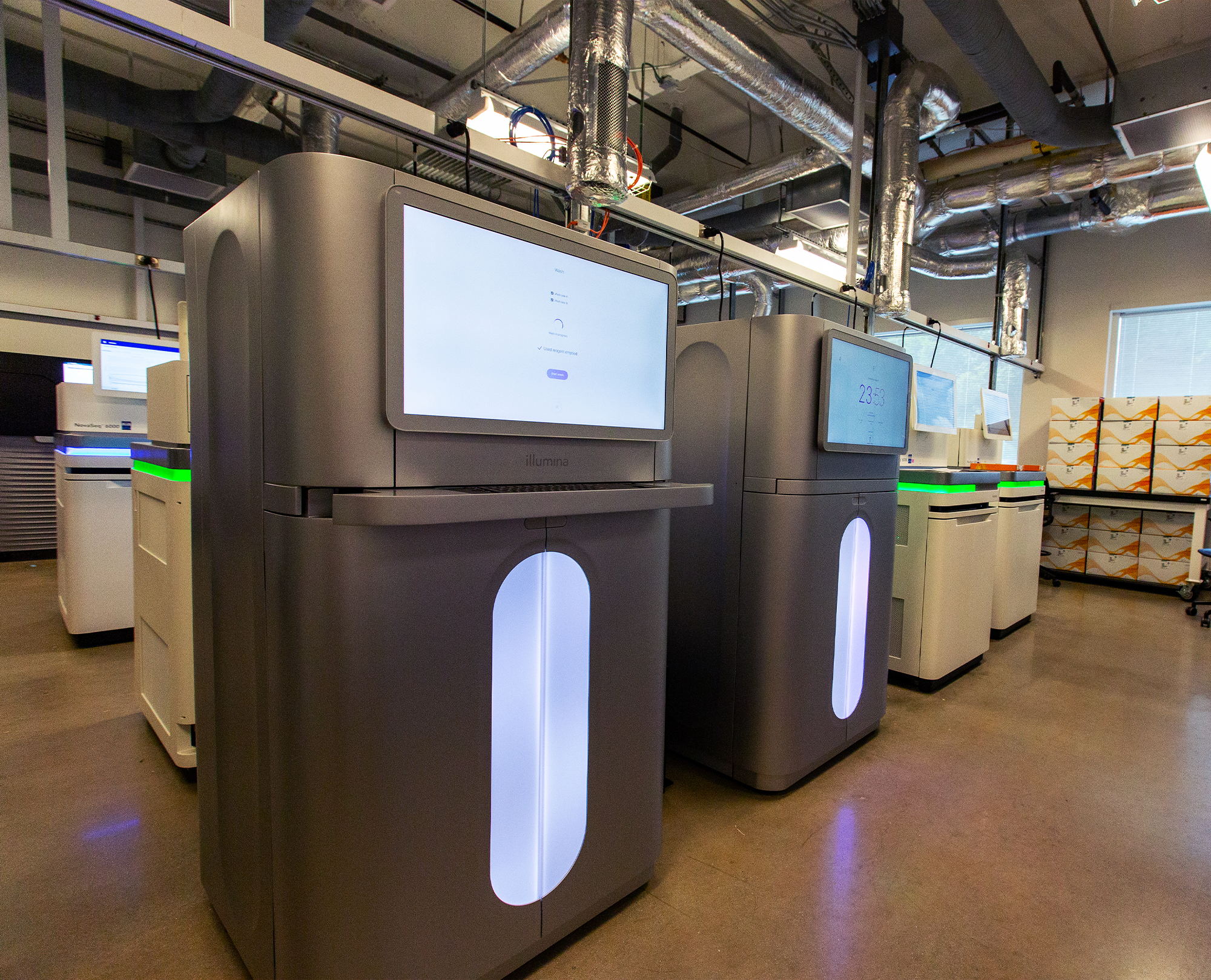
Massive scale with the world’s largest commercial fleet of NovaSeq X Plus, Illumina NovaSeq 6000 sequencers as well as NextSeqs, MiSeqs, and iSeqs
Optimized low-input NGS workflows make the most out of your precious sample material while reducing technical bias and increasing assay reproducibility.
Our scientists approach research challenges with the intelligence and agility to tailor project designs, achieving optimal outcomes.
We wield a range of domain expertise helping you improve study designs, avoid problems, and optimize results.
How We Reduce Technical Bias
At Discovery, we are committed to quality and reproducibility, so we’ve built proprietary and optimized workflows to help you accelerate your research with confidence:
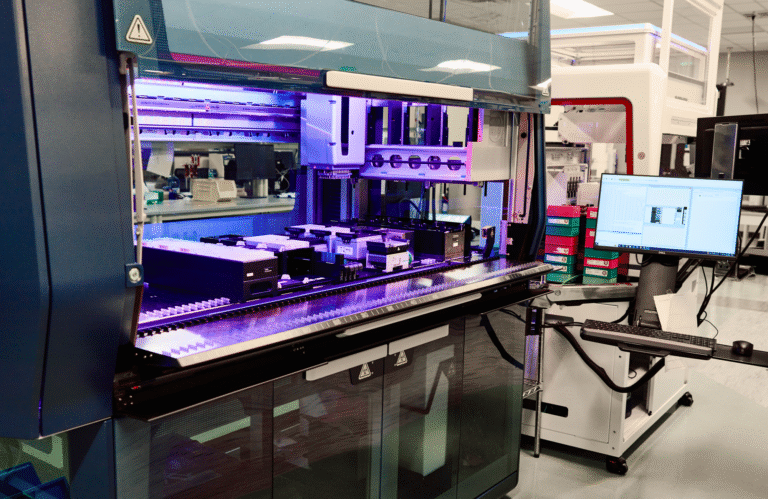
- Automation to ensure consistency
- Multiple points of quality assessment
- All libraries are qPCR balanced prior to sequencing
- Distributed sequencing of balanced library pools across flow cells/sequencers normalizing variability
Genomic Services Frequently Asked Questions
How do I get in touch with someone to get a quote?
Contact us at info@dls.com or click here and we will put you in touch with the right experts to discuss your project.
How can I arrange sample shipments?
Before arranging any sample shipment, a Scope of Work (SOW) and/or Purchase Order (PO) must be completed. You will be assigned a dedicated project manager as your point of contact, who will guide the process and ensure all documentation is in place. Shipments received without proper information may be quarantined or returned. A project kick-off discussion with your project manager is conducted prior to shipment to confirm alignment with laboratory activities.
Where will project details be noted and who is my primary contact?
An SOW will be compiled by your dedicated team members. The SOW details laboratory activities and ensures client alignment prior to any sample processing.
The SOW will be shared with you for edits and comments. Discovery’s quality standards require that the SOW is agreed upon and signed off by Discovery and the client prior to any testing being performed.
Your primary contact throughout your project will be your dedicated project manager.
NOTE: Some projects may not require a formal SOW if deemed out of scope for the nature of the project at Discovery's discretion. This will be discussed with your dedicated representative during the initiation of each project.
What information is required when I send my samples?
All sample shipments will require a clearly defined manifest including Protocol/Study identification, sample information, patient ID (if available), and contact information for shipper to rectify missing and/or ambiguous information.
Click here to see sample shipment requirements.
Any shipments missing this critical information will be put into quarantine and may experience extended turnaround times.
What are genomics services?
Genomics services refer to the specialized lab-based analysis of DNA and RNA sequences to understand gene structure, function, variation, and expression. These services typically include RNA sequencing, whole-genome sequencing, epigenomics, and bioinformatics. They help researchers and biotech companies make data-driven decisions in discovery, diagnostics, and development.
What sample types are used for genomics services?
Genomics services can analyze samples including:
- Whole blood and plasma
- FFPE and fresh frozen tissues
- Saliva or buccal swabs
- Cell pellets and single cells
Sample type determines the quality of extracted nucleic acids and affects downstream analysis. For sample types not listed here, please inquire.
Are bioinformatics services included in genomics projects?
The standard deliverable for all genomics services is FASTQ files. Many projects can also include additional bioinformatics support such as alignment, variant calling, pathway analysis, differential expression analysis, fusion detection, and statistical reporting to help researchers extract meaningful insights from complex data.
What turnaround time should I expect from a genomics project?
Turnaround times depend on project complexity, sequencing type, and sample volume. Basic RNA-Seq, whole genome sequencing, whole exome sequencing or targeted panels may take 4–5 weeks, with an additional 2-3 weeks for secondary bioinformatics analysis.
What is single-cell genomics and why is it important?
Single-cell genomics analyzes gene expression and genetic variation at the individual cell level. It enables insights into cellular heterogeneity, making it vital in oncology, immunology, and neuroscience for discovering rare cell populations or disease-specific expression patterns.
Rapidly Transition from Data to Insight
Ready to get started with Discovery? Tell us a little more about your project, and our experts will get to work for you.