
Is your sample the right one to answer your biological question?
Patient-derived biospecimens contain a wealth of molecular and cellular information that can unlock insights into disease mechanisms, identify therapeutic targets, and understand treatment responses. Tumor tissue, blood, plasma, and cellular fractions such as peripheral blood mononuclear cells (PBMCs) and dissociated tumor cells (DTCs) each capture different analytes representing distinct aspects of disease biology.
The analyte you’re looking for often dictates where you need to look and shapes what can be measured, how it is interpreted, and what conclusions follow.
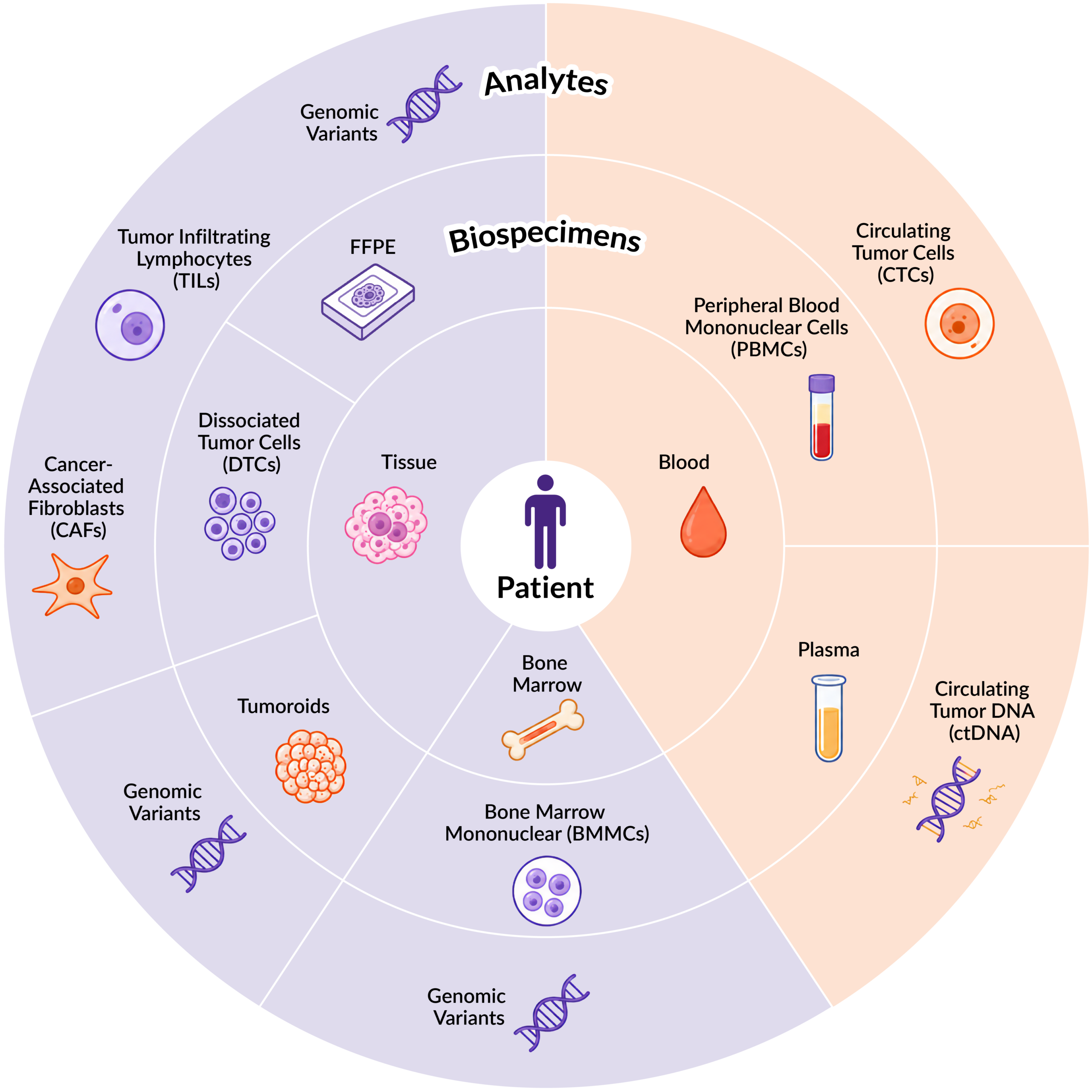
This blog series explores where key analytes live across biospecimen types and how choosing the right sample helps you answer your biological question (Figure 1).
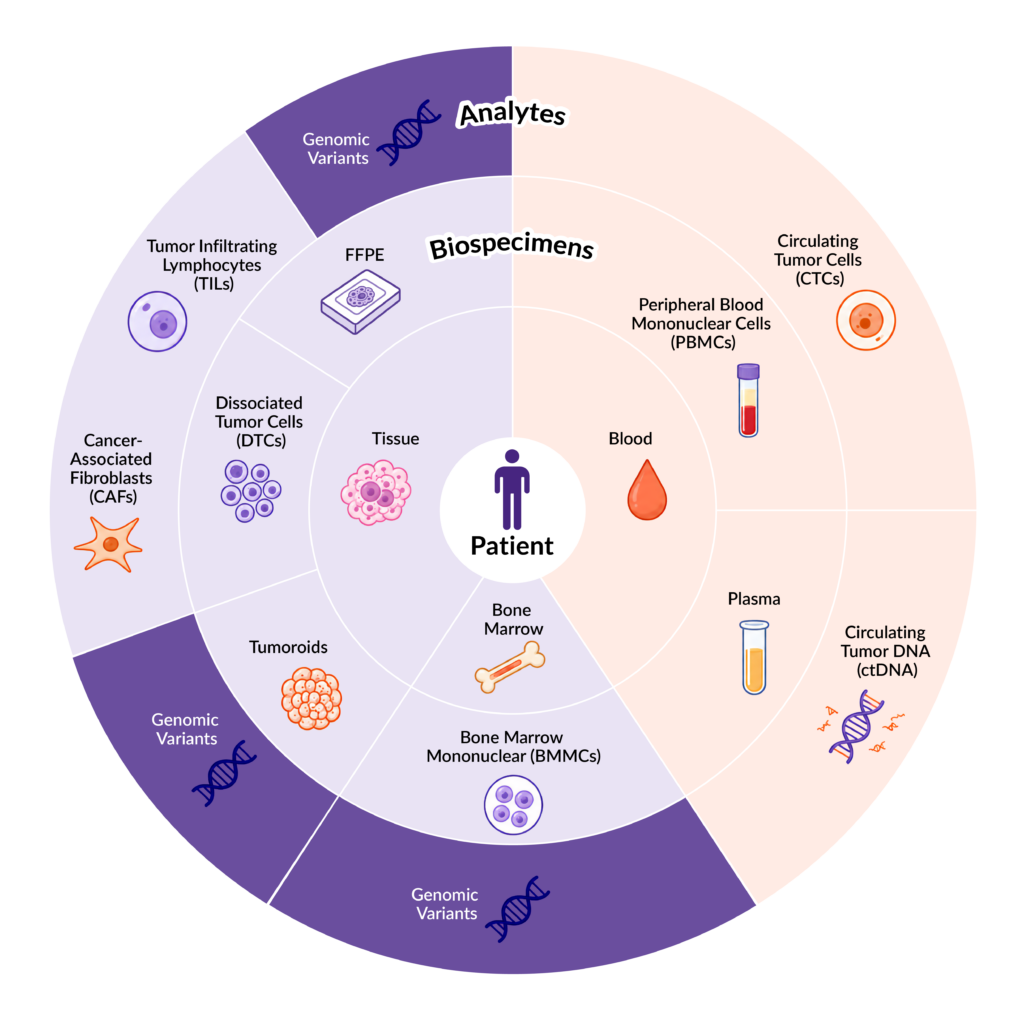
Figure 1. Distribution of key analytes across different biospecimen sample types.
Genomic variants provide a useful starting point into this discussion because they can be detected in multiple biospecimen types. The same variant may be best identified in tumor tissue or blood- or marrow-derived samples. It just depends on the answers you’re looking for.
The Genomic Landscape of Precision Oncology
Genomic variants are central to precision medicine approaches. Advances in next-generation sequencing (NGS) have enabled comprehensive profiling of patient tumors, allowing researchers to identify biomarkers that inform disease biology, support clinical trial enrollment, and guide the development of targeted therapies and companion diagnostics.
Genomic variants serve as a broad umbrella term for any alteration in the DNA sequence and encompass a wide variety of classes, ranging from single-base substitutions to chromosomal rearrangements.
- Single nucleotide variants (SNVs) and insertions/deletions (indels): The most common alterations in solid tumors, with key research interest in genes including KRAS, EGFR, BRAF, ERBB2 and PTEN. Variant allele frequency (VAF) provides a quantitative measure of how prevalent a given variant is within the tumor population, offering additional insight into tumor heterogeneity.
- Gene fusions: Structural rearrangements that create oncogenic drivers. Clinically relevant fusions (ALK, RET, ROS1, NTRK) occur at low incidence. For example, ALK fusions appear in only 3–7% of non-small cell lung cancer (NSCLC) patients, for example, making them easy to miss without sufficient structural coverage and large-scale sequencing initiatives.
- Copy number variants (CNVs): Larger-scale changes in the number of copies of the full gene. Gains or losses become pathogenic when they activate oncogenes or delete tumor suppressors. These require broader profiling approaches than those offered by small, targeted panels.
- Splice variants: Altered RNA processing events like MET exon 14 skipping that can dramatically impact therapeutic response. These variants highlight the importance of integrating RNA-based assays into genomic workflows.
- Multi-gene signatures: Aggregate patterns like tumor mutational burden (TMB) and microsatellite instability (MSI) that reflect broader genomic states rather than single-gene events, which help guide immunotherapy selection and broader precision-oncology strategies.
These variants exist across multiple sample types, which means researchers are not simply searching for a genomic variant, but for a variant within the appropriate biospecimen context. For example, FFPE tissue is typically used to characterize ALK-positive tumors in their native tissue context, while double-spun plasma (DSP) would be used to detect the same ALK fusion in circulating tumor DNA (ctDNA) for liquid biopsy applications while viable ALK-positive DTCs in culture could model the response to an ALK-fusion targeting drug. Studies assessing concordance between tissue- and blood-based testing require matched biospecimens derived from the same donor.
While personalized medicine is making strong headway in oncology, the reality is that many patients are still not tested for these genetic variants as part of standard of care. Even for advanced NSCLC, which has one of the highest levels of clinical adoption, 49.7% of patients do not receive diagnostic genetic testing1.
This creates a fundamental bottleneck: the lack of genomic data linked to available patient biospecimens. Therefore, before a study can begin, researchers must not only identify the genomic alteration of interest but also locate a biospecimen where that alteration is present, measurable, and suited for the research question at hand. In practice, this often means screening large numbers of samples to identify a smaller subset that satisfies both criteria.
A Faster Path to the Variants You Need
SpecimenSeq™ addresses this challenge by providing access to biospecimens from Discovery’s biobank that have been genomically characterized upfront, eliminating the need for extensive de novo screening to identify samples with specific variants of interest. By linking molecular profiles to available biospecimens upfront, researchers can identify and receive relevant biospecimens within days, significantly reducing turnaround time and cost.
Targeted NGS profiling captures clinically relevant SNVs, indels, gene fusions, and copy number variants (CNVs), as well as larger patterns such as TMB and MSI across tumor types and biospecimen sources (Figure 2).
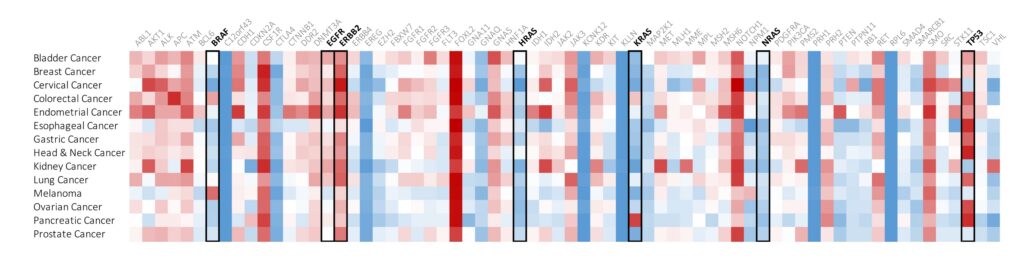
Figure 2. Heatmap illustrates the distribution of gene alterations across solid tumor indications using data from the first 1,894 FFPE samples sequenced in the SpecimenSeq™ program. Key genes of interest are bold.
In practice, researchers looking for biospecimens with ALK fusions, KRAS variants, or novel markers with growing research interest can easily search the database based on detailed molecular annotations that include variant class and VAFs across a portfolio of FFPE tissue, frozen tissue, DTCs, matched biospecimens, and biofluids. VAFs are included as part of this annotation because it provides critical context on variant abundance within a sample, which can influence its suitability for downstream use cases. High VAF variants generally offer more reproducible genetic signals, making them well suited for robust assay validation and comparative analyses. In contrast, low VAF samples can be used to define an assay’s lower limit of detection and help inform thresholds for biomarker-based patient stratification strategies.
Beyond Single Variants: SpecimenSeq™ Matched Set Samples
Beyond variant identification, many research questions require understanding how the same genomic variant behaves across biological contexts. These questions can be answered using SpecimenSeq™ matched set samples from the same donor, enabling direct comparison between tumor, blood, bone marrow, and cellular compartments for deeper insights into disease biology or therapeutic response.
In liquid biopsy applications, such as minimal residual disease (MRD) assessment and multi-cancer early detection (MCED), matched trios provide important biological context for interpreting these variants. Double-spun plasma captures ctDNA shed from tumor subclones actively releasing DNA into circulation. FFPE tissue reflects the full tumor genomic landscape, preserving intratumoral heterogeneity, while non-viable buffy coat provides germline DNA for clonal hematopoiesis of indeterminate potential (CHIP) control.
For functional studies, patient-derived tumoroids preserve key genomic and phenotypic characteristics of the original tumor while providing a biologically relevant system for downstream experimentation. Because Discovery’s tumoroids are characterized using whole exome sequencing (WES) and RNA sequencing, researchers can identify models harboring specific variant of interest for on-target drug efficacy or mechanism of action studies. When paired with matched fibroblasts or PBMCs from the same patient, tumoroids provide a connected view of tumor biology across genomic, cellular, and functional layers.
With a current run rate exceeding 1,500 patients per year, Discovery’s biobank continues to expand in both scale and molecular coverage, increasing the availability of matched and deeply characterized biospecimens. SpecimenSeq™ reduces the distance between biological question and sample selection, allowing researchers to move directly from variant of interest to relevant biospecimen more quickly so they can focus on generating biological insight.
And There’s More…
Stay tuned for the next blogs in this series where we explore other key analytes, including cell-free DNA (cfDNA), circulating tumor cells (CTCs), tumor-infiltrating lymphocytes (TILs), and cancer-associated fibroblasts (CAFs) and where they live in the biospecimen landscape.
References
- Tsimberidou, A. M., Sireci, A., Dumanois, R., & Pritchard, D. (2024). Strategies to Address the Clinical Practice Gaps Affecting the Implementation of Personalized Medicine in Cancer Care. JCO Oncology Practice, 20(6), 761–766. https://doi.org/10.1200/op.23.00601

Debbie King
Scientific Writer, Discovery Life Sciences