

Introduction
The biopharma industry has traditionally carried a heavy environmental footprint, relying on energy-intensive equipment, disposable single-use systems, and chemicals that generate significant waste. But things are changing. Rising environmental concerns and growing expectations from consumers and regulatory bodies are prompting more companies to think about how science can be done more responsibly and sustainably. This includes not only reducing their own impact but also choosing to work with vendors who share their commitment to sustainability.
Discovery’s Newtown lab, which specializes in high-quality immunohistochemistry (IHC) and histopathology services, is leading the way in driving company-wide sustainability initiatives. In 2025, the lab received the Green level certification from My Green Lab®, an international program that provides labs with practical tools to reduce their footprint, track progress, and make sustainability part of everyday work. Achieving Green Level certification was the culmination of months of hard work and proof that top-tier science and sustainable practices can go hand in hand.
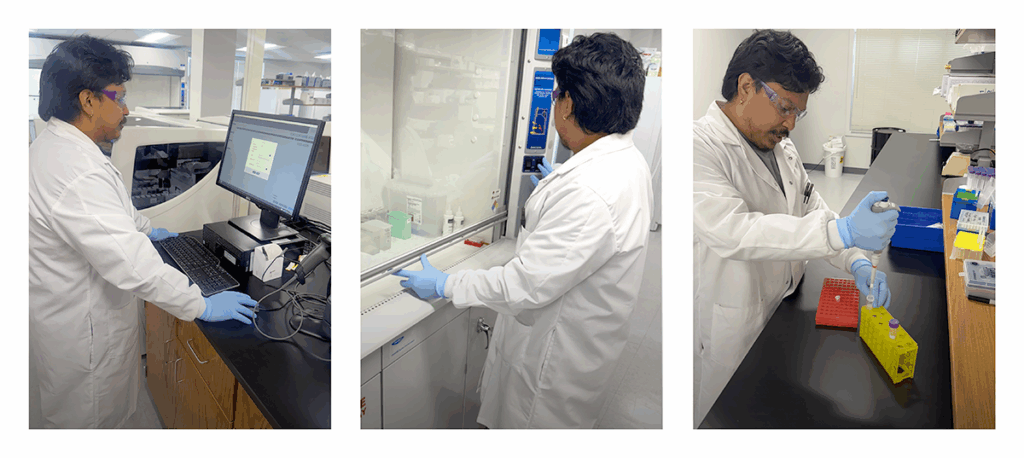
Inside Discovery’s Newtown lab, where sustainability meets science (pictured: Will Manosca).
What is My Green Lab® Certification?
Endorsed by the UN-backed Race to Zero and recommended by the U.S. EPA, the My Green Lab® certification program evaluates labs across core categories, ranging from energy and water use to procurement, waste management, and employee engagement. Labs pursuing certification follow a clearly defined roadmap, starting with a baseline assessment, identifying areas for improvement, implementing sustainable practices, before completing the certification process.
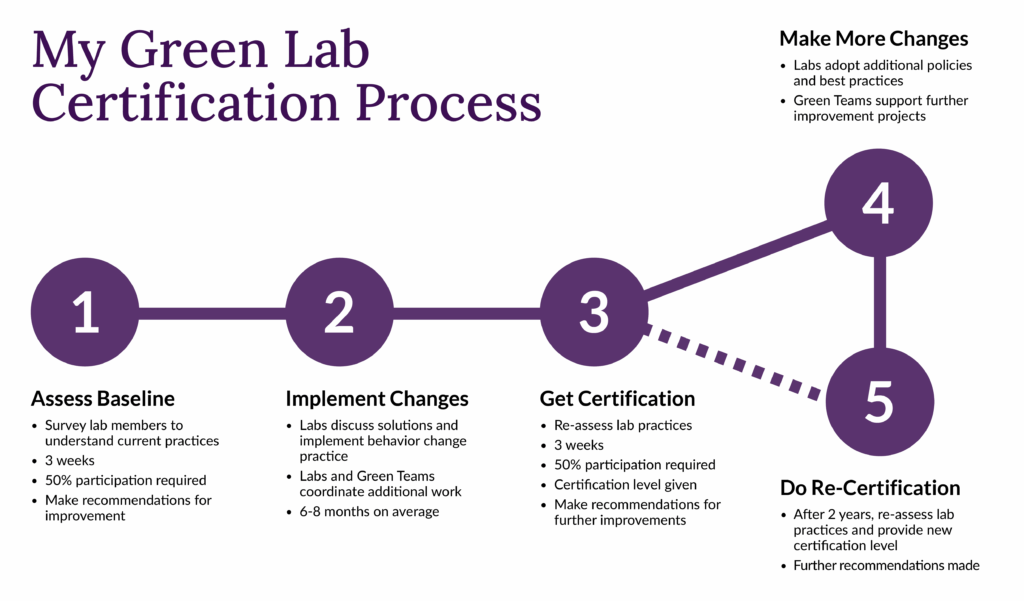
The My Green Labs® certification process.
Since its launch, over 4,000 labs worldwide have achieved certification, a testament to its growing impact and acceptance across the scientific community. My Green Lab® uses a tiered certification system: Bronze, Silver, Gold, Platinum, and Green. The Newtown laboratory proudly achieved Green level certification, which represents the highest level of sustainability.

The Newtown lab achieved the highest level of My Green Labs® certification – Green Level.
Discovery’s Journey to Becoming Green Level Certified Lab
The Newtown lab began its My Green Lab® Certification journey in the summer of 2024 and, just seven months later, proudly earned Green Certification in June 2025. That quick turnaround was the result of teamwork, dedication, and strong backing from senior leadership.
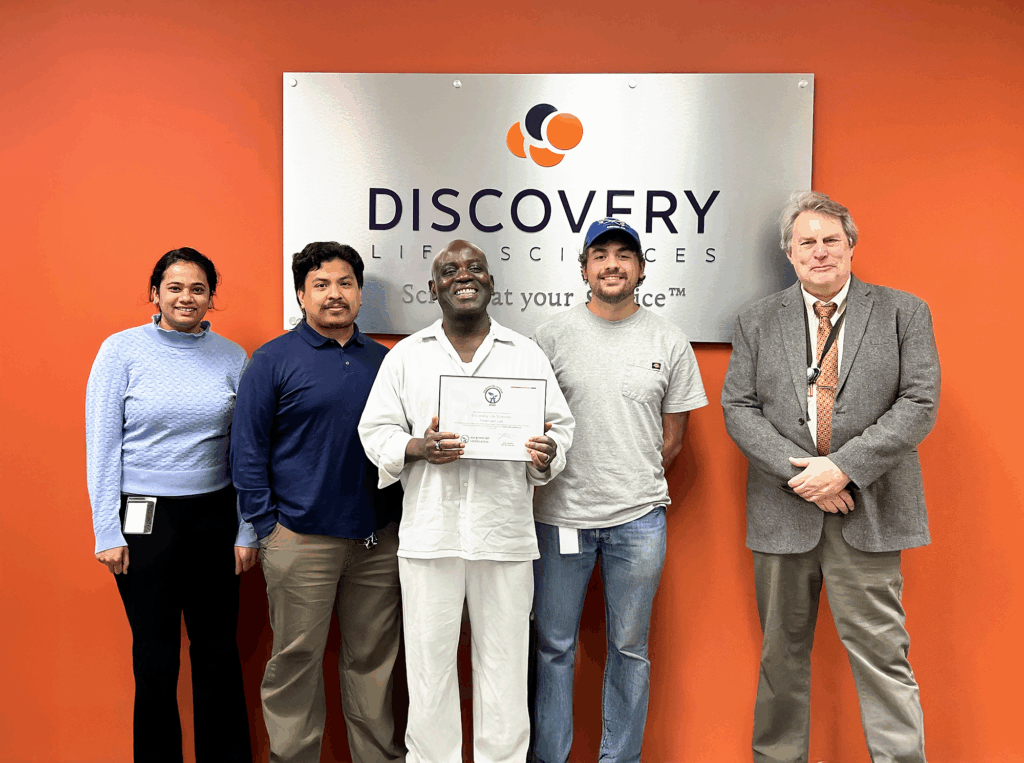
Green Lab Team members: Malvi Patel, William Manosca, Osman Ouattara, Luke Szyszkiewicz, Dr. Rick Siderits, and Wes Gage (not pictured).
The process began with a baseline assessment of sustainable practices across multiple categories. The lab scored 66%, which showed many good practices were already in place, but also pointed to areas for improvement. Based on feedback, the Green Lab team worked together to implement positive changes that led to a final score of 99% at the certification assessment.
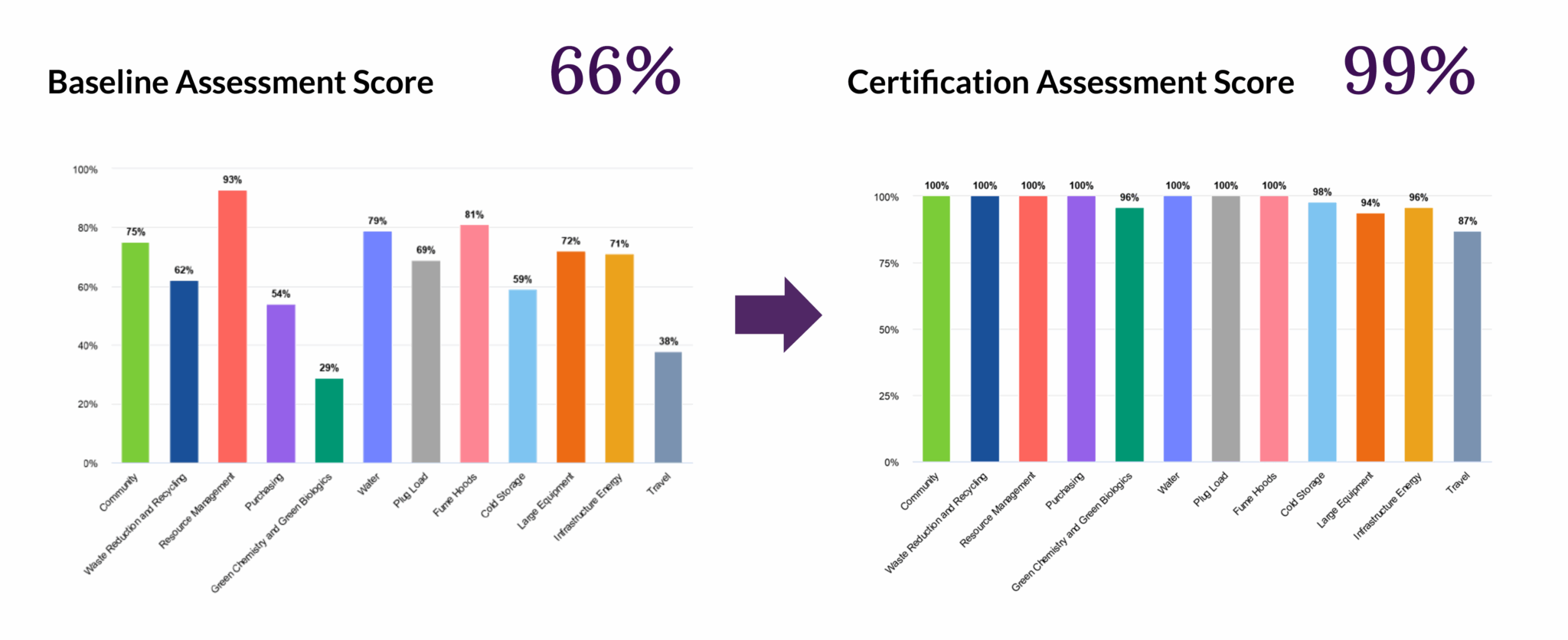
From baseline score of 66% to final certification assessment score of 99% in just 7 short months.
For example, the My Green Lab® assessment helped the team identify opportunities to implement green chemistry, including replacing xylene with a safer substitute in tissue processors, adopting automated platforms that cut down on reagent waste. These changes not only reduced environmental impact but also lowered costs and made lab procedures more consistent.
When asked what drove their success, the team pointed to three key elements: Alignment, Innovation, and Discovery. The team emphasized the importance of aligning and integrating Green Laboratory Certification with Discovery’s organizational vision, administrative mission, and core values, to ensure program sustainability.
Innovation also played a big role. The team paired the Green Process with Laboratory Safety, capitalizing on routine safety inspections to promote sustainability goals. They also incorporated principles of biodiversity, biophilia and job demand resource (JDR) into the certification approach. For example, biophilia emphasizes bringing natural elements, such as plants, natural light, water features, and wood finishes, into the workplace to create healthier, more inspiring environments that align with both human well-being and ecological responsibility. At Newtown, this has included redesigning break rooms with “green corners” that feature natural elements.
To organize efforts, an interactive, shared “Green Mind Map” was used, which later grew into a full Green Manual of Operations that captured all certification and procedural requirements.
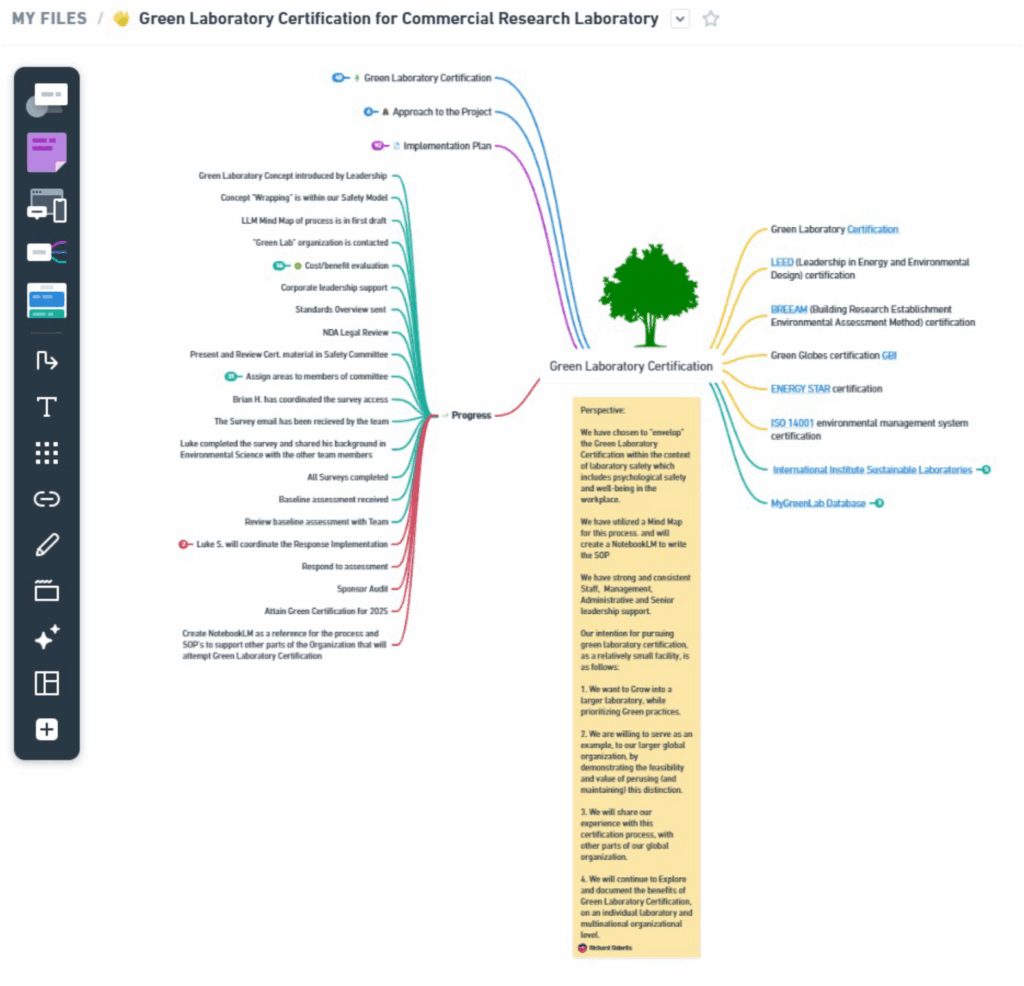
The “Green Mind Map”
Throughout the process, the team discovered new ways to collaborate, share knowledge, and developed processes that not only led to successful certification but also set the stage for broader sustainability initiatives across Discovery.
Sustainability In Action
Since achieving Green Certification in June 2025, the Newtown lab has begun to see measurable environmental and cost savings through initiatives such as energy-efficient systems, waste-reduction strategies, and smarter resource use. For example, the lab enrolled in the My Green Lab’s Freezer Challenge, a global program to optimize cold storage management to reduce energy consumption. By replacing refrigerators and freezers with units that use environmentally safe refrigerants, the lab is projected to reduce cold storage costs by up to 20%.

Tangible benefits because of My Green Labs® certification.
Collectively, these changes have reduced environmental impact, lowered operational costs, and created a healthier, more sustainable lab—one that employees are proud to work in and that is appealing to prospective talent as well.
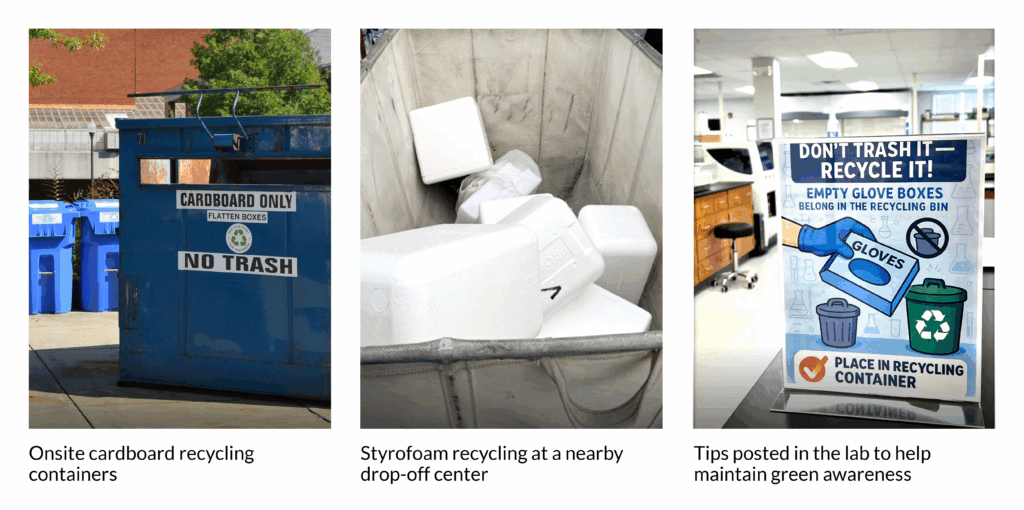
Examples of positive environmental changes that have made Newtown a greener, more sustainable lab.
The Human Element: Embracing a Green Mindset
When asked about the most meaningful change for people working at Newtown, the team’s answer was clear: adopting a “green mindset.” Sustainability has become part of the identity of the lab and the people who work there, inspiring greener choices both at work and at home.
“Working on the Green Lab certification has shown me that little changes can make a big difference when undertaken by the entire team. I have also taken steps outside of the lab to lessen my footprint, being mindful in my use of single-use plastics and using more public transportation and carpooling options when available.” Luke Szyszkiewicz, Laboratory Associate-IHC.
For many, the certification has created a sense of pride in working at a Green Certified lab. To keep the momentum going, the Safety Committee now holds a monthly “Green Metrics” review to track recycling, carpooling, and other sustainability indicators. Lab members can also contribute ideas through a dedicated email box, ensuring continuous improvement remains a shared responsibility.
“The pride I feel knowing our laboratory is not only making strides in cancer research but that we are doing so with the sustainability of our environment in mind. Fortunately, our habits did not change much because our laboratory was pretty conscious prior, but now we are recognized for our thoughtful conservation!” Will Manosca, Laboratory Associate-IHC.
Building a Greener Future Across Discovery
A big thank you to the Newtown lab team for their dedication and hard work to achieve the Green Certification. Their efforts are an inspiration and set the stage to improve sustainability at other Discovery facilities. By embedding greener practices into lab operations, we are providing a better environment that benefits our employees as well as supporting our partners and clients in advancing more sustainable and greener science.
Looking ahead, the Newtown lab will undergo recertification in two years, which will be a chance to reassess their sustainability efforts and continue identifying areas for improvement. Ongoing initiatives like ice pack recycling continue to reduce the lab’s environmental footprint. These ice packs will be repurposed by local faith-based organizations to support community meal deliveries.