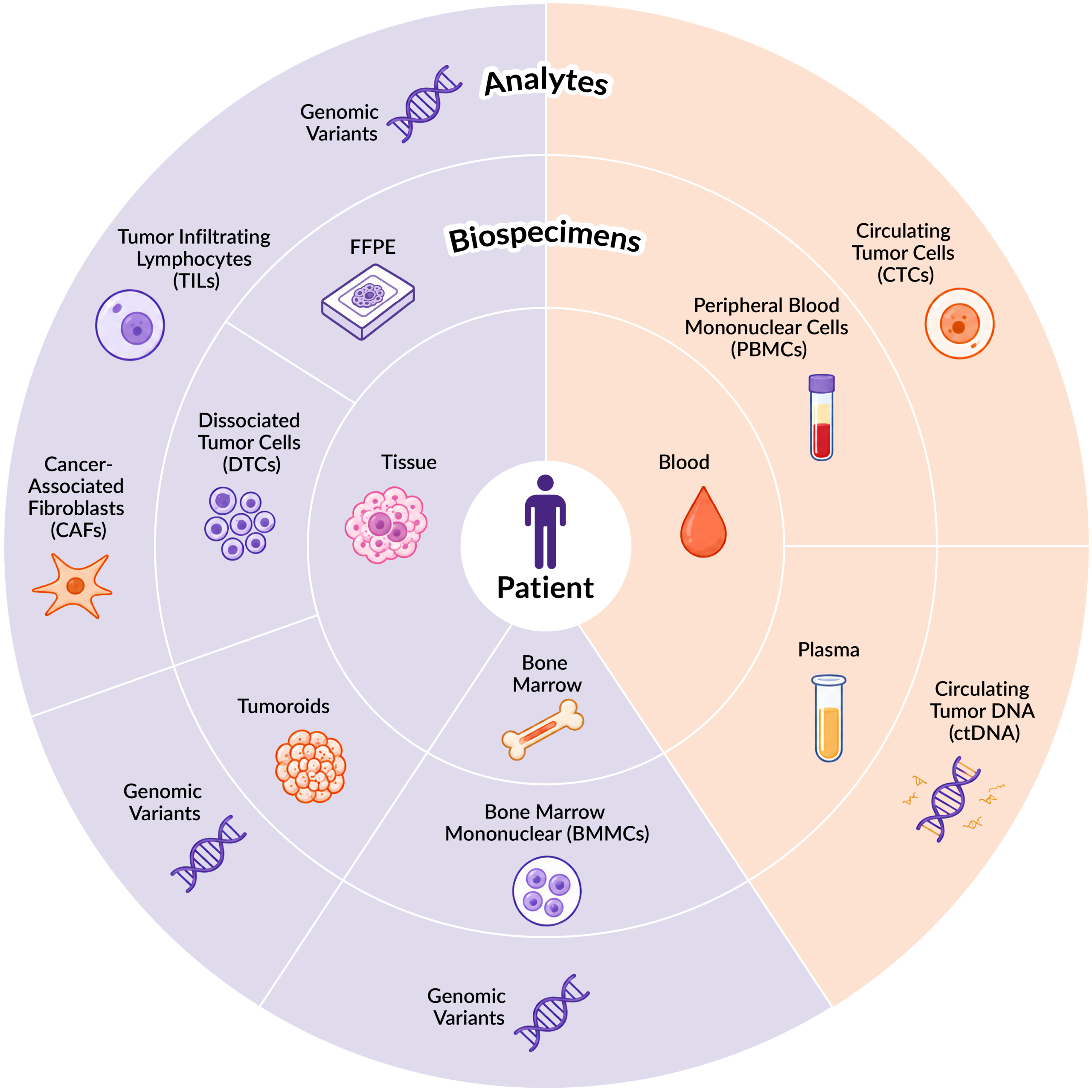
Are you using the right sample to answer your biological question?
Patient-derived biospecimens contain a wealth of molecular and cellular information that can improve our knowledge of cancer biology to drive advances in diagnostics and therapeutic development. There is no single biospecimen that captures every aspect of cancer biology. The right sample depends on the analyte and the biological question you’re trying to answer.
Whether you’re investigating genomic changes, characterizing the tumor microenvironment, or exploring circulating biomarkers, understanding where your analyte resides can help you select the right starting point.
Explore this blog series to learn where to look for the analytes that matter to your research.
01 | Genomic Variants
Genomic variants, including SNPs, indels, and copy number variants (CNVs), can reveal genetic alterations associated with cancer and provide insights into tumor biology. Understanding where these variants can be found across biospecimens can help researchers select the right sample for biomarker discovery, clinical research, and therapeutic development.
02 | Cell-Free DNA
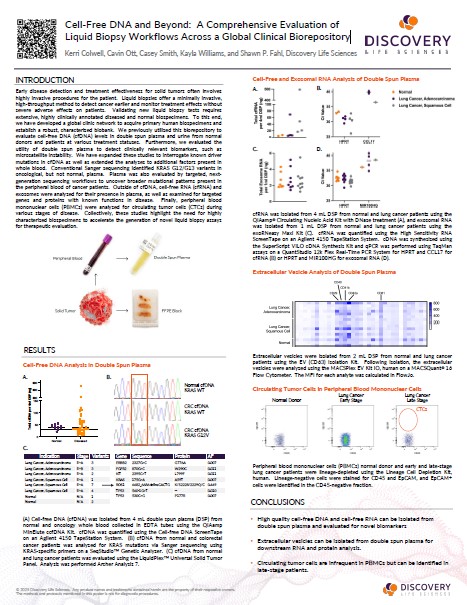
Cell-free DNA (cfDNA) circulates in biofluids, with a portion originating from tumor cells and carrying cancer-related genetic and epigenetic changes. Explore where cfDNA is found and how it can be analyzed in liquid biopsy approaches to study tumor biology, monitor disease progression, and evaluate treatment response and resistance.
03 | Tumor-Infiltrating Lymphocytes
Tumor-infiltrating lymphocytes (TILs) can influence interactions between the immune system and the tumor. TILs can be interrogated in patient-derived tumor tissue, including viable dissociated tumor and tissue cells (DTCs) and FFPE samples, providing insight into tumor–immune interactions that contribute to disease progression and therapeutic response.
04 | Cancer-Associated Fibroblasts
Cancer-associated fibroblasts (CAFs) are key cellular components of the tumor microenvironment (TME) that can influence tumor growth, survival, metastasis, and therapeutic response. CAFs can be identified in dissociated tumor and tissue cells (DTCs) and incorporated into in vitro tumoroid models to recreate the complex TME.
05 | Circulating Tumor Cells
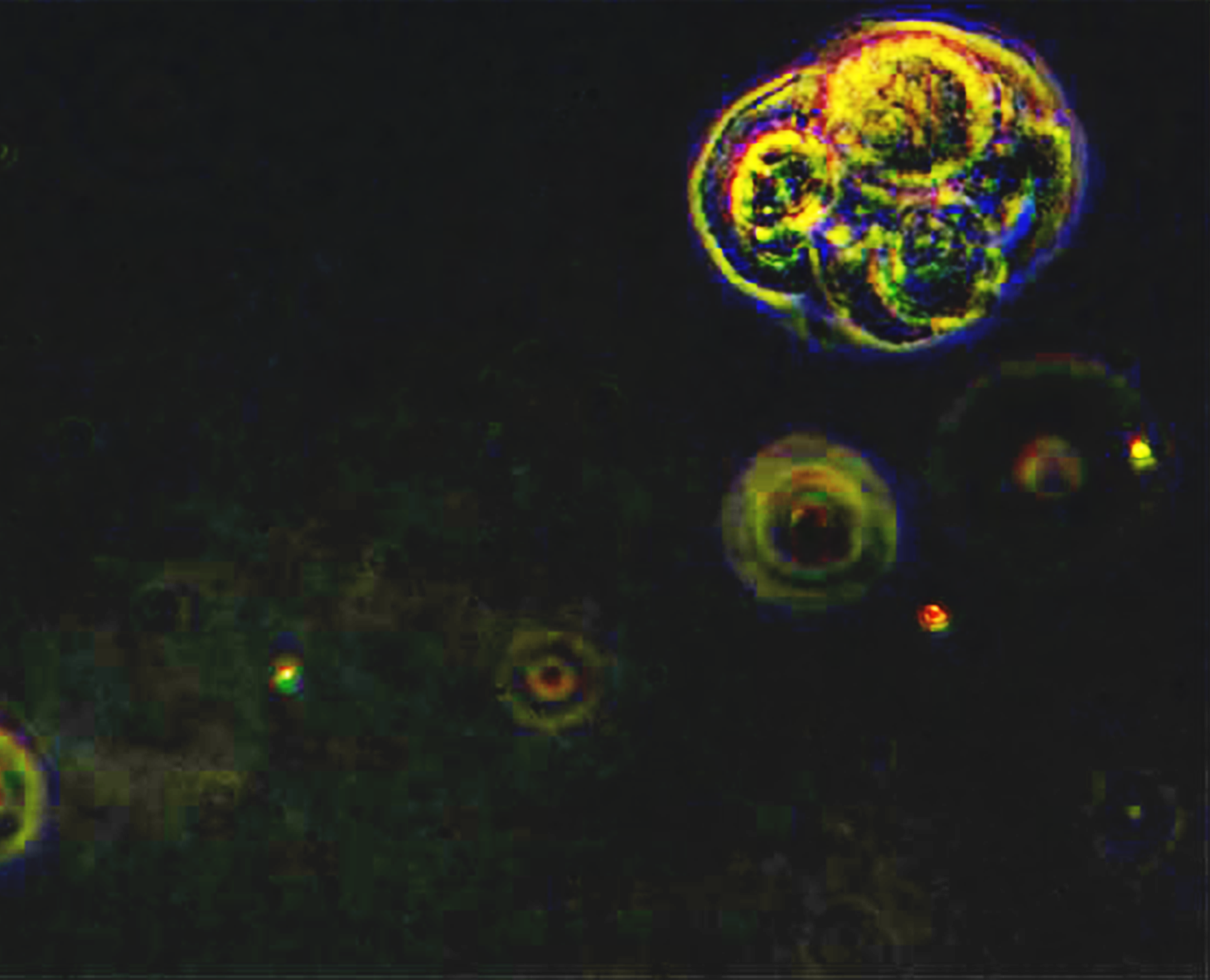
Circulating tumor cells (CTCs) are rare cancer cells that enter the bloodstream and play a role in the metastatic process. Explore how CTCs can be captured through liquid biopsy and how analyzing these cells may provide a dynamic view of tumor heterogeneity, disease progression, and metastasis.

Debbie King
Scientific Writer, Discovery Life Sciences